
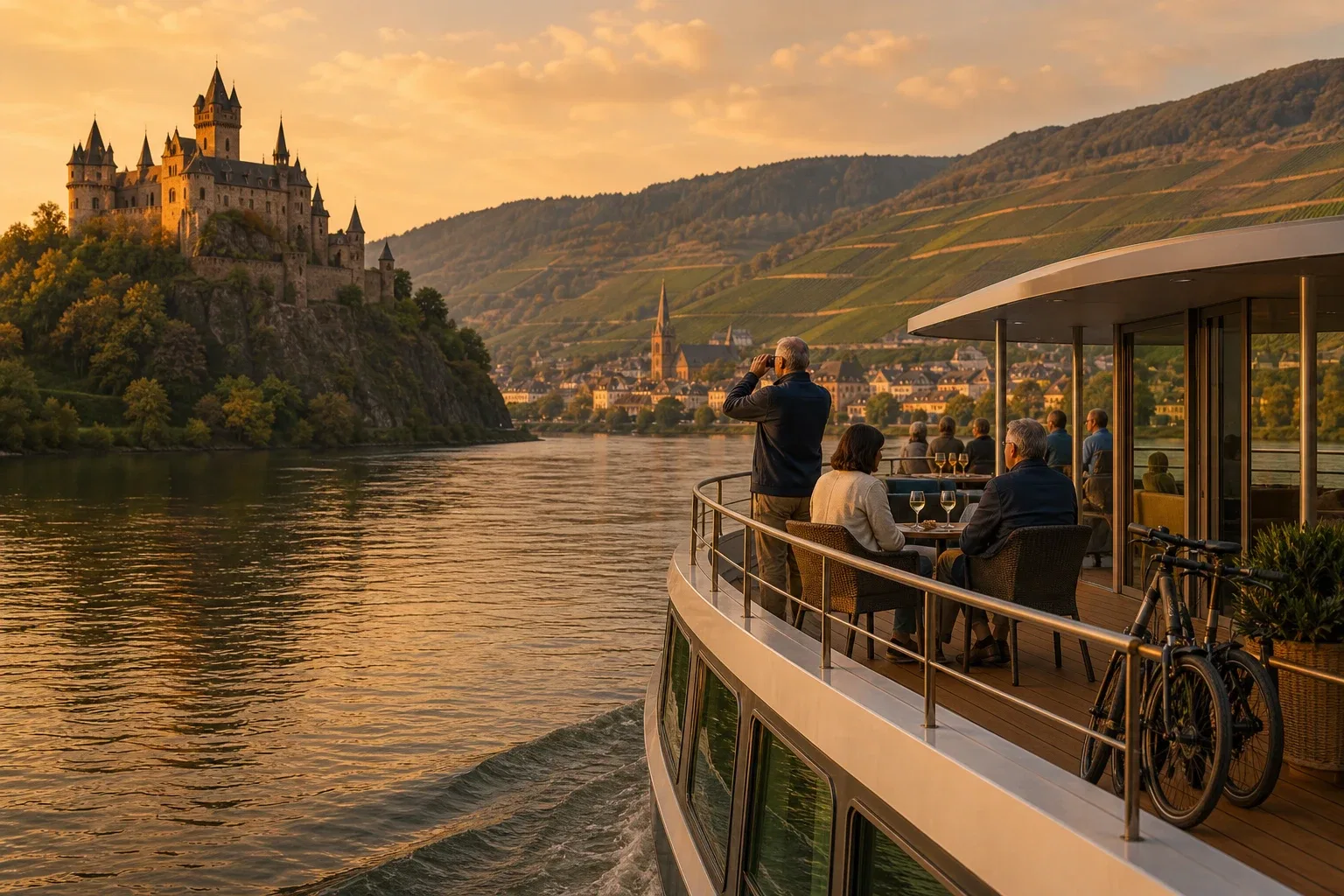
I remember sitting across from a couple a few years ago who had sailed many ocean cruises. They loved the convenience and the entertainment, but they were curious about river cruising—and a little hesitant. "Is it too slow?" they asked. "Will we feel confined? What do you actually do all day?" Those are the exact questions I hear when someone is considering a first river cruise. River cruising belongs to a different kind of travel: quieter, more intimate, and focused on places instead of onboard spectacle.
Table of Contents
- What Is a River Cruise, Really?
- How a Typical Day Unfolds on a River Cruise
- What's Included (and What Isn't)
- River Cruise vs. Ocean Cruise: Key Differences for First-Timers
- Honest Considerations Before You Book
- Best River Cruise Destinations for First-Timers
- When to Book Your First River Cruise
- How to Choose the Right River Cruise Line
- What to Pack for a River Cruise
- Why Work with a Travel Advisor for Your First River Cruise
If you are thinking about a first river cruise, the short version is this: river cruising is a relaxed, culturally immersive way to travel through Europe and other regions. It’s not a scaled-down ocean cruise; it’s a different experience built around the rhythm of the river, the towns on its banks, and a smaller group of fellow travelers. Read on and you’ll have a clearer idea of day-to-day life onboard, what’s usually included, what to watch for, and which rivers are especially welcoming for first-timers.
What Is a River Cruise, Really?
A river cruise is a journey on a small, purpose-built ship that travels inland waterways and docks in town centers rather than industrial harbors. These vessels are intimate by design—typically carrying a modest number of guests spread across a few decks—so the focus is on the places you visit rather than onboard attractions like casinos or large-scale shows. Think of the ship as a comfortable floating hotel that moves with you, letting you unpack once and wake each morning near a new cathedral spire or vineyard slope.
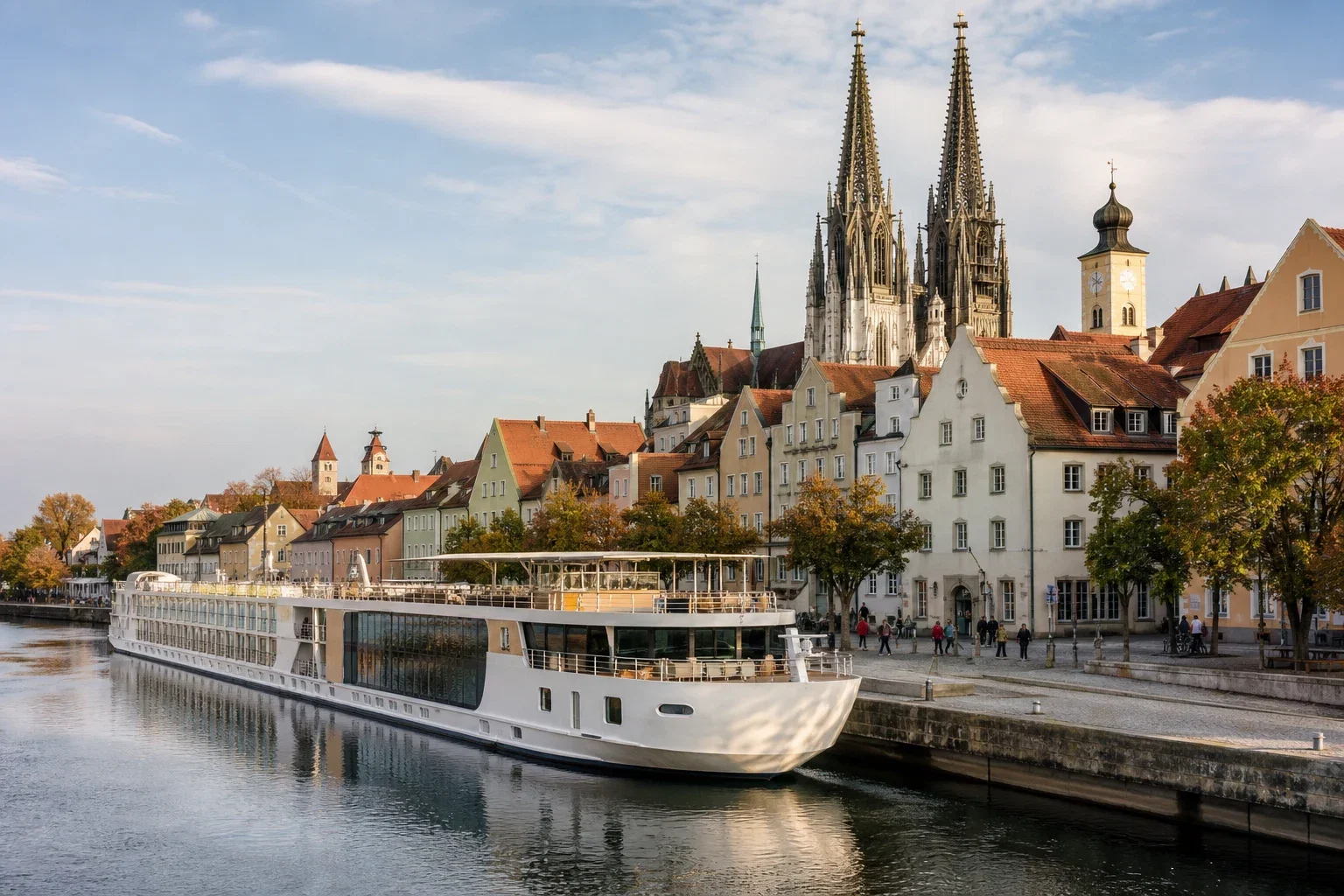
What surprises many newcomers is scale and familiarity. On an ocean ship you might not see the same face twice; on a river vessel you’ll quickly recognize fellow travelers and often hear the crew call you by name. The intimacy is intentional: river ships are built to navigate locks, low bridges, and narrow channels, and that closeness is part of the appeal. You aren’t sailing to escape the world—you’re sailing to be closer to it.
How a Typical Day Unfolds on a River Cruise
Morning: Breakfast, Excursions, and Exploration
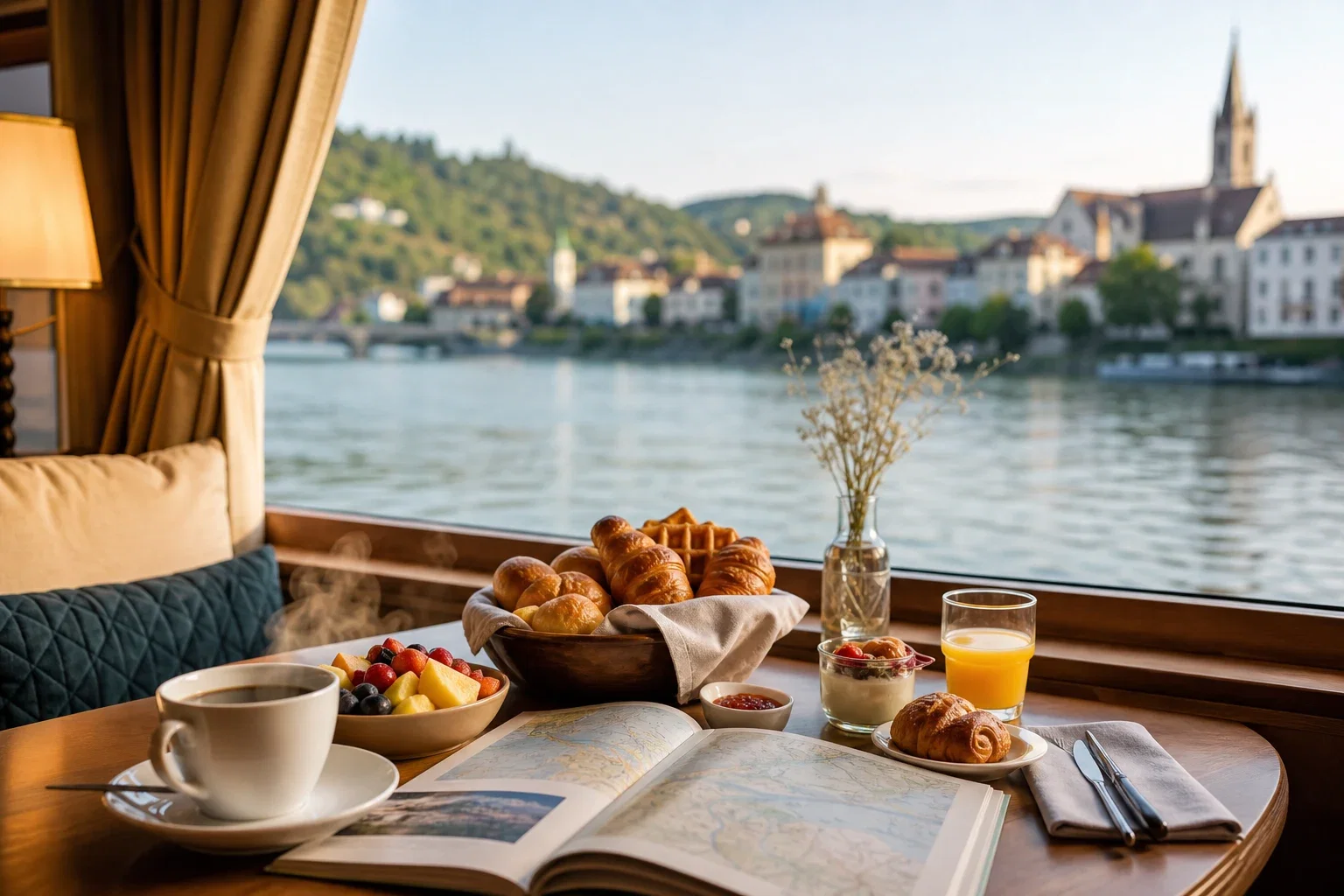
Mornings on a river cruise tend to be gentle. Breakfast service is usually flexible, with a mix of fresh fruit, pastries, eggs made to order, and regional specialties that reflect where you are sailing. The windows are large, coffee is available, and the view often changes as you eat.
After breakfast, many passengers join a guided shore excursion included in the fare. Local guides lead those tours and typically organize groups by pace—slower walkers, regular walkers, and more active groups—so you can choose what suits you. Excursions commonly last a couple of hours, leaving free time afterward to wander independently, stop at a café, or return to the ship for lunch.
Afternoon: Sailing, Scenery, and Relaxation
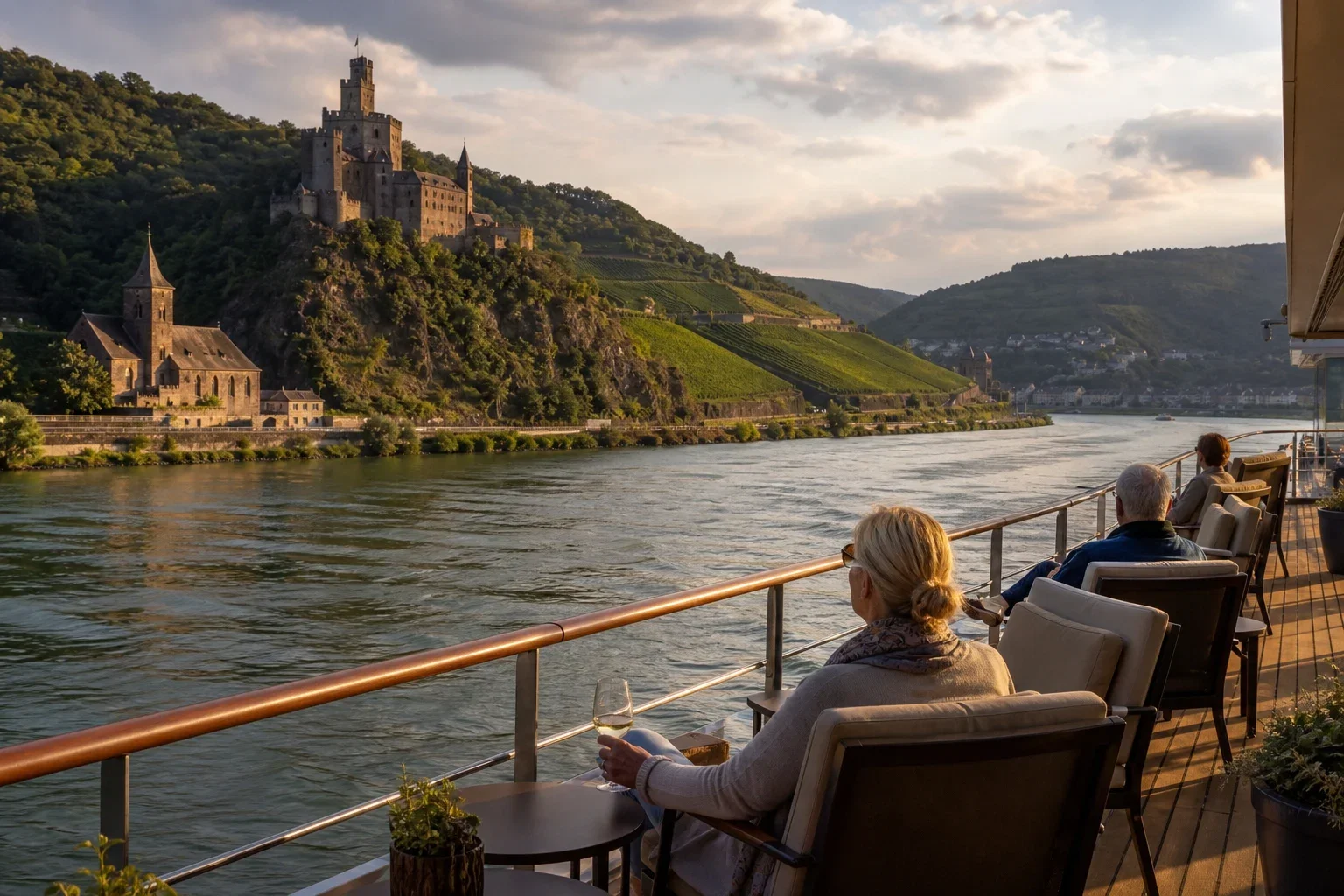
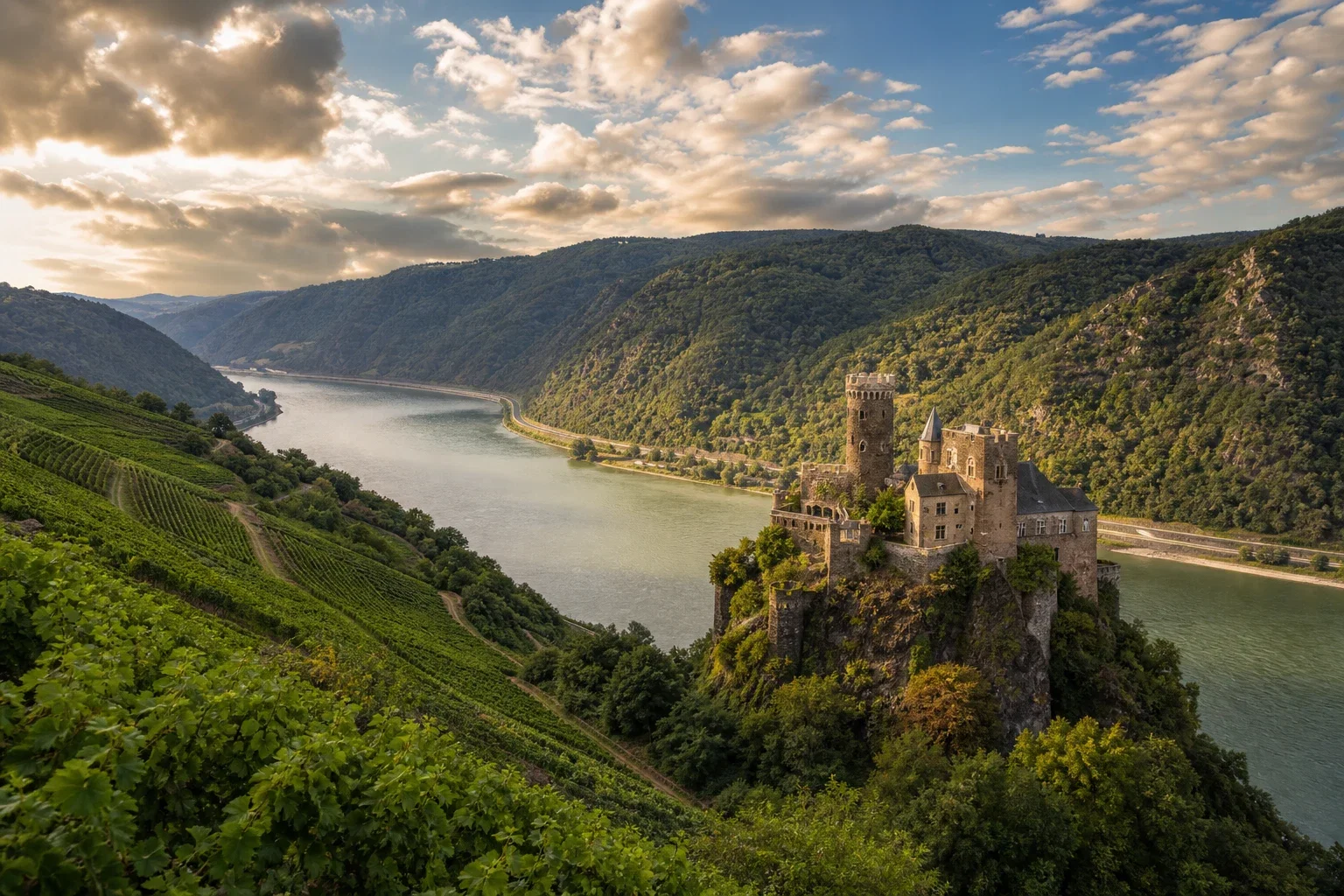
Afternoons are when the river often puts on a show. While you relax on deck or enjoy a leisurely lunch, the ship glides past landscapes that can feel straight out of a painting—castles around river bends, vineyard terraces climbing steep hills, or medieval villages dotting the shore. Many ships provide complimentary bicycles for short independent rides when docks are near scenic paths, and some offer light wellness programming such as stretching or yoga. The general mood is unhurried: people read, chat, play cards, or simply watch the riverbanks drift by.
Evening: Dinner, Drinks, and Quiet Entertainment
Dinner is typically a multi-course meal in the main dining room with regionally inspired dishes and casual yet neat attire. Complimentary local wine or beer is often available with meals, though beverage policies vary between operators. Evening entertainment is usually understated—live piano, local musicians, a guest speaker or a short port talk—so nights are quieter than on larger ocean ships. If you prefer late-night high-energy entertainment, a river cruise will feel different; if you appreciate time to converse and reflect on the day, you’ll likely enjoy it.
What's Included (and What Isn't)
One of the pleasures of river cruising is that much is organized for you. Typical inclusions are all meals, a selection of wine and beer at lunch and dinner, at least one guided shore excursion in many ports, and onboard Wi‑Fi—though the quality and exact inclusions can vary by line and itinerary. Some operators include gratuities, transfers, or a stocked minibar; others do not. Always check the specific terms for a departure before you book.
Premium drinks, certain specialty excursions (such as private after-hours museum tours, specialty cooking classes, or private winery visits), and pre- or post-cruise hotels, flights, and travel insurance are frequently extra. These optional add-ons can enhance your trip, but they are not required to enjoy a full experience on most itineraries.
Coordinating flights, hotels, transfers, and travel protection for a multi-country trip takes time and attention. One practical advantage of working with someone experienced is having those logistics handled so your travel days line up with embarkation and disembarkation, and you have the right coverage for the places you’ll visit.
River Cruise vs. Ocean Cruise: Key Differences for First-Timers
If you’ve only sailed on oceans, expect differences across almost every category. River ships are smaller—fewer guests, fewer crowds, and a more personal crew interaction. There are no long shuttle rides to city centers; river ships often dock within easy walking distance of major sights, which makes spontaneous exploration simpler.
Motion-related discomfort is much less common on rivers because the waters are calmer and the ships move gently. The pace is also different: many river itineraries spend more time docked—sometimes into the evening—allowing you to enjoy cities after day-trippers leave. Onboard entertainment focuses on local culture, lectures, and small musical performances rather than large production shows or gaming.
Cabin sizes are typically more modest than on large ocean vessels, though many ships offer suites and rooms with river-facing windows or French balconies. If generous cabin space is a priority, consider a larger cabin category. Also be candid about mobility: shore excursions often involve cobblestones, stairs, and uneven surfaces, so review excursion details and accessibility options carefully.
Honest Considerations Before You Book
River cruising is delightful for many travelers, but it’s not the right fit for everyone. A few practical realities are worth noting before you commit.
Water levels can affect itineraries. Heavy rain, drought, or unusually low or high water can force operators to make changes—shorter sailings, bus transfers between ports, or reroutes. These disruptions are usually managed professionally, but it’s helpful to be prepared for potential adjustments.
Evenings on most river ships are quieter than on ocean vessels. If your ideal vacation includes late-night dancing, comedy clubs, or casinos, a river cruise will be a different kind of evening scene. If you value relaxed nights with music, conversation, and local performances, you’ll likely feel at home.
The daily rhythm—morning excursion, afternoon sailing—can feel structured. Travelers who prefer to be constantly on the move might find it slower paced. Conversely, many people find that rhythm restorative; it’s a matter of personal preference.
Family policies vary. Some lines cater primarily to adults, others welcome families though full-scale children's programming is less common than on large ocean ships. If you plan to travel with children, check age restrictions and onboard offerings ahead of time.
Weather and season matter. Spring and early fall are often most comfortable for sightseeing, while summer brings higher temperatures and larger crowds in popular ports. Holiday-season sailings have a distinct festive atmosphere but a very different feel from spring or summer departures.
Best River Cruise Destinations for First-Timers
The Danube: A Classic Starting Point
The Danube crosses several countries and is a favorite for first-timers because it combines grand cities, charming towns, and gentle scenery. Popular segments link capitals and cultural hubs, offering a mix of imperial architecture, cozy villages, and scenic valleys. This route suits travelers who want a balance of city time and relaxed sailing.
One planning note: well-traveled sections can be busier in peak season. Choosing shoulder-season departures will reduce crowds and make for a more relaxed experience.
The Rhine: Castles, Cathedrals, and Romantic Scenery
The Rhine offers dramatic stretches—especially the famed gorge—lined with dozens of castles and steep vineyards. Ports include historic cathedral cities and charming towns known for wine and regional cuisine. For travelers drawn to medieval architecture and scenic riverbanks, the Rhine is a strong choice; look for itineraries that prioritize the gorge and the most scenic stretches.
The Seine: Art, Gardens, and the Heart of France
The Seine winds through Paris and Normandy and appeals to art and history lovers. Itineraries often include city strolls and visits to sites such as Monet’s garden, historic cathedrals, and poignant World War II locations. Because distances between ports are shorter here, expect more time ashore and less time underway.
The Douro: Portugal’s Vineyard-Lined Waterway
The Douro is intimate and scenic, winding through terraced vineyards and wine estates. It’s especially appealing for wine lovers and travelers who prefer a quieter route. Terrain is hillier, so excursions can be more strenuous; factor that into your planning if mobility is a consideration.
The Rhône: Lavender, Roman Ruins, and Provençal Charm
The Rhône showcases Provence, Roman sites, and top-tier gastronomy. Highlights include historic cities, picturesque countryside, and seasonal lavender fields in bloom. The river and regional weather patterns can affect schedules and transfers, so it’s useful to plan itineraries that allow flexibility for inland excursions.
The Nile: Ancient Wonders and Timeless Landscapes
The Nile offers an entirely different river-cruise experience, centered on ancient temples, tombs, and riverside villages. Ships tend to be smaller and more basic compared with European river vessels, but the archaeological and cultural rewards are profound. Travelers who approach the Nile with curiosity and realistic expectations about amenities and climate find it deeply rewarding.
When to Book Your First River Cruise
For many itineraries, spring and early fall provide the most comfortable weather and manageable crowds. Summer draws more travelers and higher temperatures in some regions, while holiday-season sailings have a festive but different character.
For the best cabin selection on popular routes, it pays to plan ahead. Booking several months to a year or more in advance gives you more choices of departure dates and stateroom categories. If your dates are flexible, last-minute offers sometimes appear, but selection will be limited. One practical tip I often share: prioritize the cabin type and itinerary elements that matter most to you, and be flexible on the exact date if you want to find a better value.
How to Choose the Right River Cruise Line
There is no single "best" river line—only the one that fits how you like to travel. A few well-known operators exemplify different approaches:
- Active and wellness-focused options: Some lines emphasize active programming—complimentary bicycles, guided bike tours, and onboard wellness activities—paired with a relaxed, inclusive atmosphere.
- Culture and enrichment: Other lines prioritize cultural immersion with extensive included excursions and in-depth lectures, often appealing to travelers who want structured learning about the places they visit.
- Distinct cabin designs and local-after-dark experiences: Some operators highlight river-facing cabins or evening excursions that showcase local nightlife and culture, for travelers who want to experience destinations after dark.
One thing I encourage travelers to consider is not just which brand sounds best, but which specific ship, cabin configuration, and included excursions match your priorities. Features such as bed orientation, private balconies, activity levels ashore, and family policies can vary across ships even within the same company. A comparison based on your personal priorities will direct you to the right choice faster than focusing on brand alone.
What to Pack for a River Cruise
Comfortable walking shoes are the single most important item. Cobblestones, uneven surfaces, and sometimes uphill walks are common ashore. Bring well-broken-in shoes rather than brand-new ones.
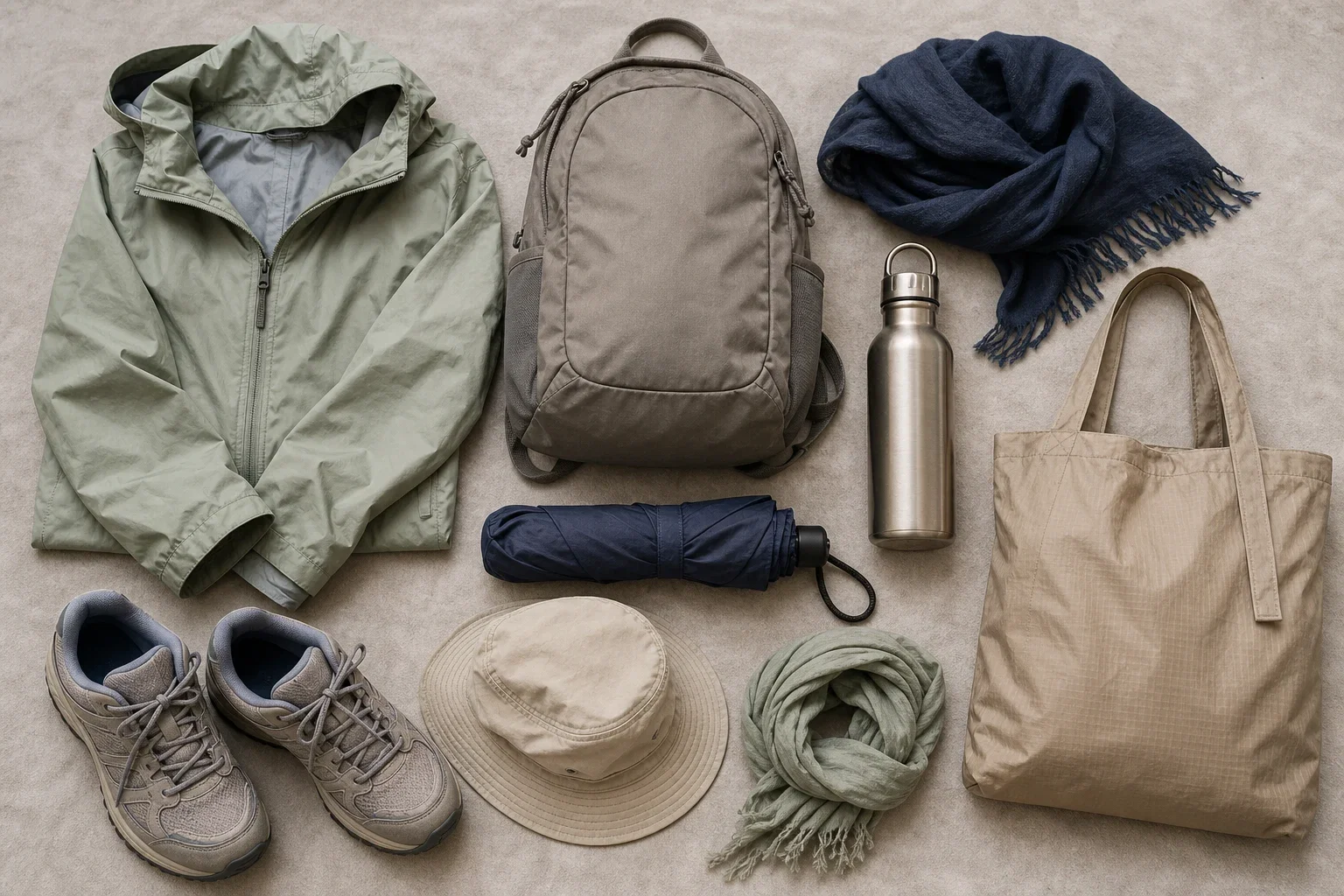
Plan for smart-casual evenings; formal wear is rarely required. Layers are essential—mornings can be cool, afternoons warm, and evenings breezy on deck. A lightweight rain jacket and small travel umbrella are useful, and a small day bag, reusable water bottle, and a foldable bag for souvenirs will serve you well.
Why Work with a Travel Advisor for Your First River Cruise
A first river cruise involves more choices than many travelers expect: which river, which line, which cabin, which excursions, and whether to add landside days before or after the sailing. A knowledgeable advisor can explain the practical differences between itineraries, point out accessibility considerations, and help you decide which options you will actually use.
Advisors also help coordinate flights, hotels, transfers, and travel insurance, which reduces stress in the planning stage. Fee structures for advisors vary—some charge a planning fee, some work on commission, and some use a combination. It’s reasonable to ask up front how an advisor is compensated so you can weigh the cost against the time and support they provide.
One practical question to ask a prospective advisor is how they handle changes or disruptions while you’re traveling. Knowing there is a contact who can assist with itinerary changes, missed connections, or on-the-ground issues adds real value beyond the initial booking.
River cruising is intimate, destination-focused, and often more accessible than many travelers expect. There isn’t a single best river or line—there’s the right match for how you like to travel. I hope this guide gives you a clearer sense of what to expect and where to begin. When you’re ready to plan, I’m happy to help you think through the options and what will make your first river cruise the right one for you.


 Featured Travel