
Do you need a passport for a cruise?
That’s a really common question, and the answer isn’t a simple yes or no. It depends on a few things: where you’re sailing, which ports you’ll visit, your citizenship, and even the specific rules of the cruise line you choose.
To make it clearer, here are the main factors that determine what travel documents you’ll need:
- Itinerary and ports of call — different countries and routes have different entry requirements.
- Your citizenship — passport and visa rules vary by nationality.
- Cruise line policies — some lines set their own document rules in addition to government requirements.
In some cases, a government-issued birth certificate plus a photo ID will be sufficient; in others, a valid passport book is mandatory with no exceptions. If you’re unsure, it’s worth double-checking the specific requirements for your trip before you leave.
Table of Contents
- The Short Answer: When You Need a Passport and When You Don't
- What Is a Closed-Loop Cruise? Understanding the Key Exception
- When a Passport Is Required—No Exceptions
- Passport Requirements for Children on Cruises
- The Six-Month Validity Rule and Other Passport Expiration Concerns
- Why the State Department Recommends a Passport Even When It's Not Required
- Passport Requirements for Alaska Cruises
- Passport Requirements for River Cruises, Expedition Cruises, and World Cruises
- What About Non-U.S. Citizens? Passport and Visa Requirements for International Travelers
- How Cruise Lines Handle Passport Requirements—and What Happens If You Don't Have the Right Documents
- How to Get or Renew a Passport Before Your Cruise
- Travel Insurance and Passport Protection
- Final Checklist: What Documents to Bring on Your Cruise
- Plan Your Cruise with Confidence
This guide walks you through every scenario so you can determine exactly what documents apply to your specific vacation plans. We will cover closed-loop cruises, international departures, specific Caribbean destinations that surprise travelers every year, requirements for children, and the emergency situations where having a passport becomes essential even when it is not technically required. By the time you finish reading, you will know precisely what to bring, when to start the application process, and why a little extra preparation now can save you from a major disruption later. If you would like help verifying the requirements for a particular itinerary or comparing cruise lines and destinations, I am always happy to walk through the details with you personally.
The Short Answer: When You Need a Passport and When You Don't
The simplest way to think about passport requirements for cruises is to separate itineraries into two categories. The first category is the closed-loop cruise: a sailing that begins and ends at the same U.S. port and visits only destinations within the Western Hemisphere. For U.S. citizens on these itineraries, a passport book is not required. You can sail with a government-issued birth certificate, an Enhanced Driver's License, or a U.S. passport card, along with a government-issued photo ID if you are 16 or older.

The second category covers everything else. A passport book is mandatory when your cruise starts in one U.S. port and ends in another, when it departs from or arrives in a foreign port, or when it visits any destination outside the Western Hemisphere, including Europe, Asia, Africa, Australia, and the South Pacific. Certain Caribbean nations also require passports regardless of your cruise type, which we will detail later.
Here is a simple way to think through your own situation: If your cruise begins and ends in the same U.S. city, stays within the Caribbean, Mexico, Canada, Bermuda, or Central America, and you are a U.S. citizen, you can sail without a passport book. If your cruise starts in one country and ends in another, crosses the Atlantic or Pacific, visits South America beyond the Western Hemisphere definition, or touches any port in Europe or Asia, you need a valid passport book. And always, always check your cruise line's specific policy, because some lines require passports for all passengers regardless of the government exception.
What Is a Closed-Loop Cruise? Understanding the Key Exception
How Closed-Loop Cruises Work

A closed-loop cruise is a voyage that starts and ends at the exact same U.S. port and remains entirely within the Western Hemisphere. The Western Hemisphere includes North America, Central America, South America, the Caribbean, and Bermuda. This exception exists because U.S. Customs and Border Protection allows U.S. citizens to re-enter the country by sea with proof of citizenship other than a passport book when returning from these destinations.
This is why a round-trip cruise from Miami to the Bahamas, a Seattle-to-Seattle Alaska sailing, or a Los Angeles-to-Los Angeles Mexican Riviera itinerary can be done without a passport. The key detail to remember is that "same U.S. port" means the identical port, not just the same state. A cruise departing from Fort Lauderdale and returning to Miami is not a closed-loop cruise, even though both are in Florida. That itinerary would require a passport book.
This exception applies only to U.S. citizens. Non-U.S. citizens, including lawful permanent residents, have different requirements that we will cover in a later section. And while the government allows this exception, the cruise line you book with may have stricter rules. Always verify with your specific cruise line before assuming you are covered.
What Documents You Can Use Instead of a Passport
If you are a U.S. citizen sailing on a closed-loop cruise, you have several document options. The most common is a government-issued birth certificate, either the original or a certified copy, paired with a government-issued photo ID such as a driver's license for passengers 16 and older. Hospital-issued birth certificates are not accepted; it must be the official document from the vital records office.
An Enhanced Driver's License, or EDL, is another excellent option. Currently available in Michigan, Minnesota, New York, Vermont, and Washington, an EDL proves both your identity and your citizenship. It is accepted at land and sea border crossings, though it cannot be used for international air travel. A U.S. passport card works similarly: it is a wallet-sized document valid for land and sea travel to Canada, Mexico, Bermuda, and the Caribbean, but not for flights.
For those who became citizens through naturalization or were born abroad to U.S. citizen parents, a Certificate of Naturalization or a Consular Report of Birth Abroad serves the same purpose as a birth certificate. One important clarification: a Real ID driver's license is not sufficient for cruise travel. Real ID proves your identity and legal presence in the United States, but it does not prove citizenship. Do not assume that having a Real ID means you are covered for a cruise.
When a Passport Is Required—No Exceptions
Itineraries That Leave the Western Hemisphere
The moment your cruise itinerary includes a port in Europe, Asia, Africa, Australia, or the South Pacific, a valid U.S. passport book becomes mandatory. There is no alternative document that will be accepted. This applies to Mediterranean cruises, Northern Europe and Baltic sailings, Asia voyages, Australian and New Zealand itineraries, and any transatlantic or transpacific crossing. World cruises and extended journeys that touch multiple continents require passports with sufficient blank pages, often ten or more, to accommodate entry and exit stamps from numerous countries.
Open-Jaw Cruises and One-Way Sailings

An open-jaw cruise is one that begins in one U.S. port and ends in a different U.S. port, such as a sailing from Seattle to Vancouver or from Fort Lauderdale to San Diego. These itineraries require a passport book even though both ends are in the United States. The same applies to any cruise that departs from a foreign port, regardless of where it ends. If you are flying to Barcelona, Rome, Singapore, or Sydney to board your ship, you need a passport book. Repositioning cruises, which move ships between seasonal home ports, frequently fall into this category. Always verify the full routing before booking.
Specific Caribbean Destinations That Require a Passport
This is where many travelers get caught off guard. Even on a closed-loop cruise from a U.S. port, certain Caribbean nations require all visitors to carry a valid passport book. The list includes Barbados, Guadeloupe, Haiti, Martinique, St. Barts, St. Martin/Sint Maarten, and Trinidad and Tobago. If your itinerary includes any of these islands, you must have a passport book, regardless of where your cruise begins and ends.
The French West Indies ports—Guadeloupe, Martinique, St. Barts, and the French side of St. Martin—are particularly common surprises. A traveler might book a round-trip cruise from Florida assuming a birth certificate will suffice, only to discover a few weeks before departure that one of these islands is on the itinerary. Cruise lines enforce these destination-specific requirements strictly. When you are comparing itineraries, look beyond the departure port and scan every single stop on the schedule. One port can change your entire document requirement.
Passport Requirements for Children on Cruises
Children have their own set of rules that parents and grandparents should understand well in advance. On closed-loop cruises, children under 16 can travel with an original or certified copy of their birth certificate, a Consular Report of Birth Abroad, or a Certificate of Naturalization. They do not need a photo ID. Children who are 16 or 17 on a closed-loop cruise need that same proof of citizenship plus a government-issued photo ID, which can be a school ID, a state ID, or a driver's license.
For any cruise that is not a closed-loop sailing, children of all ages need their own valid passport book. An infant cannot be added to a parent's passport; every traveler, regardless of age, must have their own. Getting a passport for a child requires both parents to appear in person at a passport acceptance facility with the child, unless one parent has sole legal custody. This process takes time, so starting early is essential.
Even when a passport is not required for a child on a closed-loop cruise, having one is a wise decision. If a medical emergency forces your family to fly home from a foreign port, your child will need a passport to board a flight. The same applies if you miss the ship and need to catch up at the next port. A passport provides flexibility and security that a birth certificate simply cannot match.
The Six-Month Validity Rule and Other Passport Expiration Concerns
One of the most stressful discoveries a traveler can make is that their passport expires too close to their travel dates. Many countries enforce a six-month validity rule, meaning your passport must be valid for at least six months beyond the date you plan to return home. Some cruise lines, including Royal Caribbean, apply this standard across all international itineraries. Even if a destination only requires three months of validity, following the six-month guideline is the safest approach.
Before you book a cruise, pull out your passport and check the expiration date. If it expires within six months of your planned return, start the renewal process immediately. Routine passport processing in 2026 takes approximately six to eight weeks, while expedited service takes two to three weeks. If you have imminent travel within 14 days, you can make an appointment at a regional passport agency, but availability is limited and not guaranteed. For international cruises, I recommend having a passport with at least eight to twelve months of validity at the time of sailing, simply to avoid any last-minute anxiety.
Even for closed-loop cruises where a passport is not required, carrying a valid passport book remains the most flexible and secure choice. If your passport is expired and you are only planning a closed-loop sailing, you can use alternative documents. But if there is any chance your plans might shift to an international itinerary in the near future, renewing now gives you options later.
Why the State Department Recommends a Passport Even When It's Not Required
Emergency Scenarios That Require a Passport
The U.S. State Department strongly recommends that every cruise passenger carry a passport book, and the reasoning becomes clear when you consider real-world emergencies. A medical situation that requires evacuation to the United States means you will need to fly home from a foreign country. Without a passport, you cannot board an international flight. A sudden illness, an injury during a shore excursion, or an unexpected medical condition can turn a relaxing vacation into a logistical crisis if you lack the proper documentation.
Missing the ship in a foreign port is another scenario that happens more often than travelers expect. If your independent shore excursion runs late or you lose track of time, the ship will not wait. Once it sails, you are in a foreign country without a passport, and you will need one to fly to the next port or back to the United States. Mechanical issues, itinerary changes due to weather, or political unrest can also force a ship to dock in a country that requires passports, even if your original itinerary did not include it. A family emergency at home that requires you to leave mid-cruise presents the same challenge. In all of these situations, a passport book is the difference between a manageable disruption and a genuinely frightening predicament.
The Practical Case for Carrying a Passport Book
Beyond emergencies, a passport book simply makes travel easier. It is the most widely accepted form of identification in the world. When you re-enter the United States, a passport streamlines the customs process and eliminates questions that can arise with alternative documents. If you need to book a last-minute flight for any reason, you can do so without scrambling to find a workaround.
The peace of mind is worth the investment. A U.S. passport book for a first-time adult applicant costs $165, including the acceptance fee, and is valid for ten years. When you consider that against the cost of a cruise, airfare, and the value of your vacation time, it is a modest expense for a significant layer of protection. You do not need to use it to be glad you have it. Knowing you are prepared for the unexpected allows you to relax and enjoy every moment of your trip.
Passport Requirements for Alaska Cruises
Alaska cruises deserve their own section because the rules shift depending on your specific routing. A round-trip Alaska cruise from Seattle that visits ports like Juneau, Ketchikan, and Skagway, and makes a brief stop in Victoria, British Columbia, is a closed-loop cruise. For U.S. citizens, a passport book is not required. You can sail with a birth certificate and photo ID, an Enhanced Driver's License, or a passport card.
However, many Alaska cruises operate differently. A one-way sailing from Seattle to Vancouver, or from Vancouver to Anchorage, requires a passport book because it begins in one port and ends in another, and in many cases departs from or arrives in Canada. Cruises that depart from Vancouver are particularly common, and because Vancouver is a foreign port, every U.S. citizen on board needs a passport book to fly into Canada and board the ship.
Even for closed-loop Alaska cruises, I recommend carrying a passport book. These itineraries spend significant time near Canadian territory, and if an emergency requires you to disembark in Canada and fly home, a passport will be necessary. The proximity to international borders and the remote nature of some Alaskan ports make a passport a prudent choice, even when it is not technically required.
Passport Requirements for River Cruises, Expedition Cruises, and World Cruises
European River Cruises
European river cruises always require a valid passport book. These sailings typically travel through multiple countries, often crossing Schengen Area borders, and there is no closed-loop exception that applies. Whether you are cruising the Danube, Rhine, Seine, Douro, or any other European waterway, your passport must be valid for at least six months beyond the end of your cruise. Non-U.S. citizens should check visa requirements for each country on the itinerary, as Schengen rules apply and some nationalities need advance visas even for short stays.
Expedition Cruises (Galápagos, Antarctica, and Beyond)
Expedition cruises to the Galápagos Islands require a valid passport book for entry into Ecuador, and U.S. citizens do not need a visa for stays under 90 days. But the passport itself is mandatory, and you will need it to fly through mainland Ecuador to reach the islands. Antarctica cruises present a more complex picture. Most depart from Ushuaia, Argentina, or Punta Arenas, Chile, both of which require a passport for entry. Even if your Antarctica cruise begins with a flight from the United States, you will pass through South American airports and need your passport at multiple points. Expedition cruises often operate in remote regions where emergency evacuation would require air travel, making a passport essential even if a technical loophole existed.
World Cruises and Around-the-World Journeys
World cruises demand careful document preparation. You will need a passport book with ample blank pages, often ten or more, to accommodate entry and exit stamps from dozens of countries. Some nations on world cruise itineraries require visas obtained in advance, and the requirements can change from year to year. Your passport validity should extend well beyond the cruise end date, ideally twelve months or more, to satisfy the entry requirements of every country you will visit. This is an area where working with a travel advisor who can help you map out the specific visa and document requirements for each segment is especially valuable.
What About Non-U.S. Citizens? Passport and Visa Requirements for International Travelers
If you are not a U.S. citizen, the document requirements for cruising are different and often more involved. Lawful Permanent Residents, or green card holders, need both their valid green card and their passport from their country of citizenship for closed-loop cruises. For international itineraries, the passport book from your country of citizenship is mandatory, and you may need visas depending on the destinations visited.
Travelers from Visa Waiver Program countries need a valid passport from their eligible country and an approved ESTA authorization before boarding. ESTA applications should be completed at least 72 hours before travel, and the authorization is typically valid for two years. Non-U.S. citizens should always carry both their passport and their U.S. immigration documents when cruising. Visa requirements vary significantly by destination, and some Caribbean countries require visas for certain nationalities even on closed-loop cruises. The best approach is to consult with your travel advisor and check the embassy website of each destination country well before booking.
How Cruise Lines Handle Passport Requirements—and What Happens If You Don't Have the Right Documents
Cruise Line Policies vs. Government Requirements
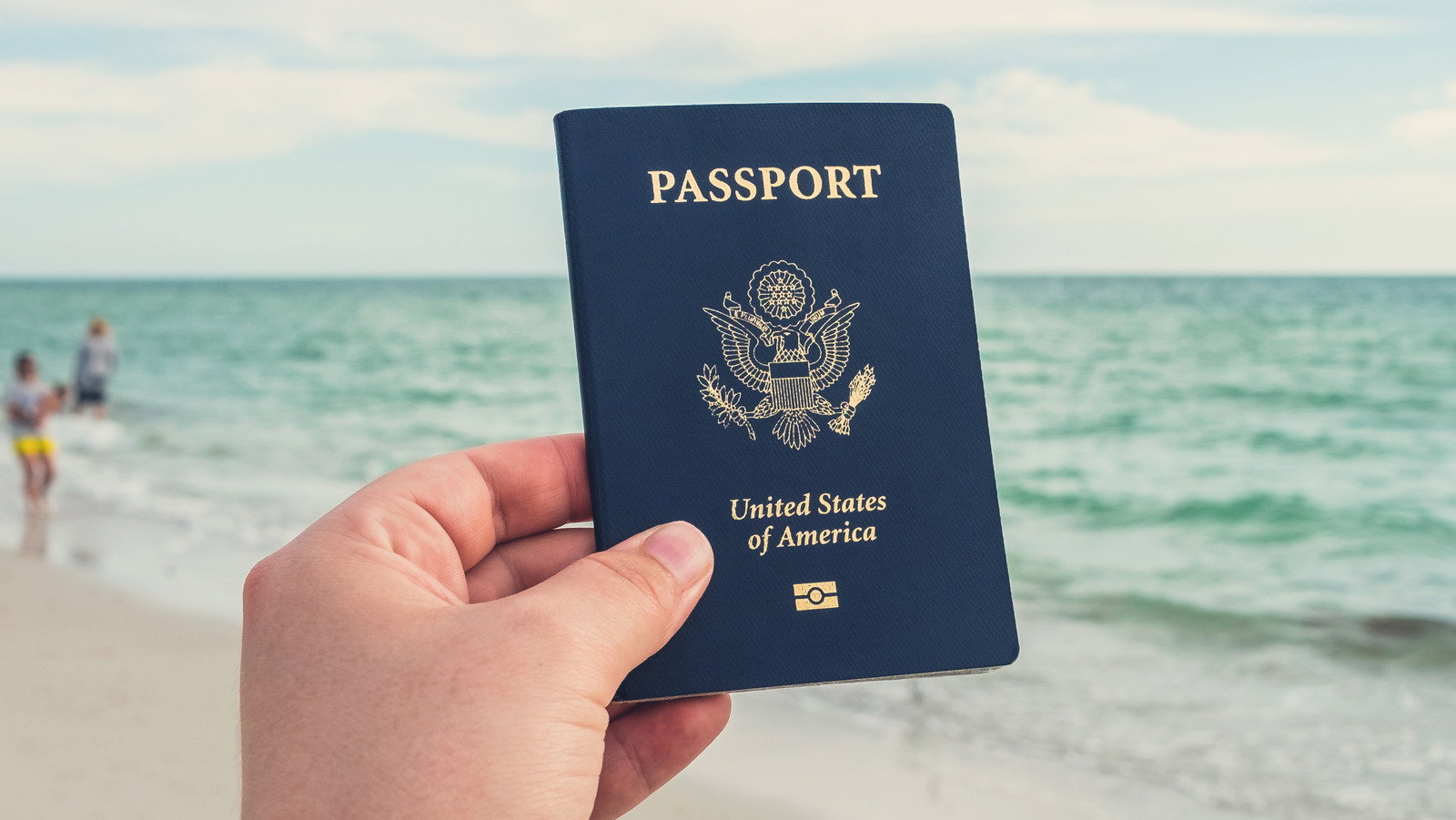
It is important to understand that cruise lines can and do set their own document policies, which may be stricter than what the U.S. government requires. Some cruise lines, including Royal Caribbean and MSC, require passports for all passengers on all itineraries, regardless of the closed-loop exception. Carnival requires passports for any passenger who may need to re-enter the United States by air, land, or sea, which covers most realistic scenarios. Other lines follow the government minimums but strongly recommend passports in their pre-cruise documentation. Always check your specific cruise line's requirements at the time of booking and again before final payment, because policies can and do change.
Denied Boarding—What You Risk Without Proper Documents
The consequences of arriving at the cruise terminal without the correct documents are severe and non-negotiable. Passengers who cannot present the required identification will be denied boarding. Cruise lines generally do not offer refunds or future cruise credits when boarding is denied due to improper documentation. Travel insurance typically does not cover this situation either, because it is considered a personal responsibility to bring the correct documents. The financial loss can include the full cruise fare, airfare, pre-cruise hotel stays, and any shore excursions or packages you purchased in advance. It is a devastating way to start what should have been a wonderful vacation, and it is entirely preventable with a little advance planning.
How to Get or Renew a Passport Before Your Cruise
If you need to apply for a new passport or renew an existing one, give yourself plenty of time. As of 2026, routine processing takes approximately six to eight weeks, while expedited service takes two to three weeks. Expedited appointments at regional passport agencies are available for travelers with imminent departure within 14 days, but these appointments fill quickly and require proof of travel.
Adults whose previous passport was issued within the last 15 years, when they were 16 or older, can renew by mail. First-time applicants and all children must apply in person at a passport acceptance facility, such as a post office, library, or county clerk's office. For international cruises, I recommend starting the passport process at least six months before your sailing date. This allows time for unexpected delays, corrections, and the visa application process if your itinerary requires it. If you are traveling with children, build in additional time for gathering the required parental consent documents and scheduling an in-person appointment that works for both parents.
Travel Insurance and Passport Protection
Travel insurance and passport preparation go hand in hand, and thinking about both together makes sense during the planning phase. If your passport is lost or stolen during your cruise, many travel insurance policies cover replacement costs and provide emergency assistance to help you navigate the process in a foreign country. Trip cancellation and interruption coverage may apply if a passport issue, such as an unexpected renewal delay due to a documented emergency, forces you to cancel or cut short your trip.
Medical evacuation coverage is especially important for international cruises, as it covers the emergency transport that would require a passport to facilitate. What travel insurance does not cover is denied boarding due to a forgotten or expired passport. That responsibility rests entirely with the traveler. When you are comparing insurance options, a travel advisor can help you understand what is covered and what is not, and can make sure your document requirements and insurance protections are aligned before you leave home.
Final Checklist: What Documents to Bring on Your Cruise
Before you pack your bags, run through this checklist based on your specific cruise type.
For a closed-loop cruise as a U.S. citizen, bring one of the following combinations: a government-issued birth certificate plus a photo ID, an Enhanced Driver's License, a U.S. passport card plus a photo ID, or a valid passport book. For any international cruise departing from or arriving in a foreign port, bring a valid passport book and check that it has at least six months of validity remaining and sufficient blank pages.
For an Alaska cruise, if it is a round-trip from Seattle, the closed-loop documents apply. If it is a one-way sailing or departs from Vancouver, bring your passport book. For any river cruise, expedition cruise, or world cruise, bring your passport book with ample validity and blank pages, plus any visas required for the countries on your itinerary.
Make physical copies of all your documents and store them separately from the originals. Take photos of everything with your phone and email them to yourself so you can access them from anywhere. Carry your documents in a waterproof travel wallet or pouch, and share your itinerary and document information with a trusted contact at home who can help if anything goes wrong.
Plan Your Cruise with Confidence
Document requirements can feel like a maze of rules and exceptions, but they do not have to be a source of stress. When you take the time to understand exactly what your specific cruise requires, you can walk up the gangway with confidence, knowing you have everything you need. The right documents mean a smooth embarkation, a worry-free vacation, and the ability to handle whatever unexpected situations might arise.
If you would like help verifying the passport and visa requirements for a particular itinerary, comparing cruise lines, or finding the sailing that matches the way you like to travel, I am here to help. As an independent travel advisor affiliated Virtuoso , I work with travelers to sort through the details, from cabin selection and shore excursions to travel insurance and pre-cruise hotels. This personalized planning service comes at no additional cost to you, and it can make the difference between a trip that feels complicated and one that feels effortless.
You can visit Travel Today In Style to begin planning your next vacation. When every detail is thoughtfully arranged, you are free to relax, explore with confidence, and create memories that will stay with you long after you have returned home.


 Featured Travel