

Choosing the right cabin
Few decisions shape a cruise vacation as much as the cabin you choose. It’s the place you’ll wake up each morning, unwind after a busy day in port, and fall asleep to the gentle rhythm of the sea. Because the cabin is such a central part of the trip, it’s worth taking a little time to get this right.
If you’re feeling overwhelmed, you’re not alone. There are a lot of terms to digest—interior, oceanview, balcony, suite, and even location labels like forward, midship, and aft—and those words alone can make your head spin before you even open the deck plan.
- Interior
- Oceanview
- Balcony
- Suite
- Forward, midship, aft (locations)
The goal of this guide is simple. By the time you finish reading, you’ll know what each cabin category typically offers, which questions to ask yourself before booking, and how to pick the stateroom that really fits the way you like to travel. This isn’t about choosing the cheapest option on the ship—it's about finding the room that will make your vacation feel just right.
Table of Contents
- The Four Main Cabin Categories: What to Expect
- Location Matters: Choosing Where on the Ship to Stay
- Special Considerations for Different Travelers
- Making Your Cabin Selection: A Practical Decision Framework
- How a Travel Advisor Can Help with Cabin Selection
- Final Thoughts: Choosing the Cabin That Fits Your Vacation
The Four Main Cabin Categories: What to Expect
Cruise lines organize their accommodations into four broad categories, and nearly every ship you research will follow some version of this structure. Interior, oceanview, balcony, and suite: each one serves a different type of traveler, and none is inherently better than the others. What matters is how you plan to use your cabin and what kind of experience you want when you step inside.
Cabin sizes vary considerably from one cruise line to another and even between ships within the same fleet. A standard interior cabin might measure anywhere from 140 to 200 square feet, while balcony staterooms typically add another 30 to 60 square feet of private outdoor space. Older ships often have smaller rooms with more traditional layouts, while newer vessels tend to feel more spacious and thoughtfully designed. Some cruise lines have also introduced creative variations that blur the lines between categories. Royal Caribbean's virtual balcony interiors, for example, use floor-to-ceiling LED screens to display real-time exterior views, bringing a sense of openness to an otherwise windowless room. Understanding these distinctions is the first step toward a confident cabin selection.
Interior Cabins
Interior cabins are the most straightforward option on any ship, and they work beautifully for travelers who view their stateroom primarily as a place to sleep and refresh. Without windows or natural light, these rooms create a dark, cocoon-like environment that many guests find surprisingly conducive to deep sleep. If you are the type of cruiser who spends most of your day by the pool, exploring ports, or enjoying onboard activities, an interior cabin can be a perfectly comfortable choice that leaves more of your vacation budget available for shore excursions, specialty dining, or a longer itinerary.
Modern interior cabins are far from the cramped, claustrophobic spaces some travelers imagine. Most include a desk area, ample storage, a private bathroom, and the same quality bedding found in higher categories. On select newer ships, virtual windows or porthole-style LED screens display live footage from outside the ship, adding a subtle connection to the sea without the higher fare of an oceanview or balcony stateroom.
Oceanview Cabins
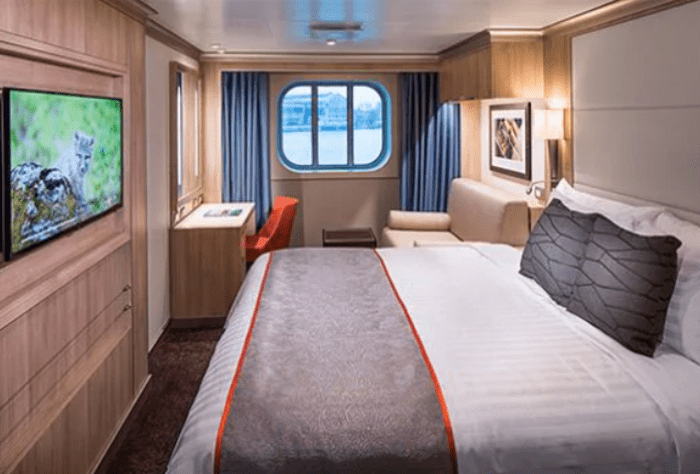
An oceanview cabin splits the difference between an interior room and a balcony, offering a window or porthole that floods the space with natural light. For travelers who want to feel connected to the ocean and watch the horizon without paying for private outdoor space, this category often hits a sweet spot. Waking up to sunlight over the water can make even a modest stateroom feel open and inviting.
The size and placement of the window matter more than most first-time cruisers realize. Some oceanview cabins feature large picture windows with sweeping views, while others have smaller portholes set higher on the wall. Obstructed-view oceanview cabins, where lifeboats or structural elements partially block the sightline, are typically priced lower than their unobstructed counterparts. If the view itself is a priority, it is worth confirming exactly what you will see before finalizing your cabin selection. For first-time cruisers who are unsure whether they need a balcony, an oceanview cabin offers a comfortable introduction to life at sea.
Balcony Cabins
Balcony cabins are the most popular category on most cruise ships, and it is easy to understand why. Having your own private outdoor space changes the rhythm of a cruise vacation. Morning coffee with nothing but open water in front of you, a quiet hour with a book while the ship glides between islands, watching the lights of a new port appear on the horizon as you sail in at dawn: these are the moments that make a balcony worth considering.
Standard balconies typically range from about 30 to 60 square feet, furnished with a small table and two chairs. That is enough room to sit comfortably and enjoy the view, though not necessarily to lounge fully stretched out. Some ships offer larger, deeper balconies on certain decks, particularly aft-facing cabins where the outdoor space can be substantially bigger. If you value quiet moments away from the energy of the main pool decks and public areas, a balcony cabin is often the category that best rewards the investment.
Suites
Suites represent a significant step up in space, amenities, and often in the overall cruise experience. The category spans a wide range, from junior suites that are essentially larger balcony cabins with a sitting area to sprawling multi-room accommodations with separate living and dining spaces. On some ships, the largest suites rival high-end hotel rooms in both size and design.
Beyond square footage, suites frequently come with privileges that can reshape your entire vacation. Priority embarkation and disembarkation, access to private lounges and exclusive restaurants, butler service, upgraded bath products, and dedicated concierge support are common suite-level perks. For travelers celebrating a milestone anniversary or honeymoon, multi-generational groups who want a central gathering space, or anyone who simply prefers a more elevated level of service, a suite can transform a lovely cruise into something truly memorable. The key is understanding which perks each cruise line includes, because suite benefits vary widely and not all are created equal.
Location Matters: Choosing Where on the Ship to Stay
Once you have narrowed down your preferred cabin category, the next layer of cabin selection involves location. Where your stateroom sits on the ship affects how much motion you feel, how much noise you hear, and how convenient it is to reach the venues you plan to use most often. Two cabins in the same category can deliver completely different experiences based solely on their position on the deck plan.
The most stable part of any ship is low and centered. Lower decks sit closer to the ship's center of gravity, which naturally reduces the sensation of rolling and pitching. Midship cabins, regardless of deck, offer the smoothest ride in nearly any sea condition. Forward cabins, especially on higher decks, experience the most movement, while aft cabins can sometimes feel vibration from the ship's engines. If you have never cruised before and are unsure how your body will respond to motion, choosing a midship cabin on a lower deck is the safest starting point.
Minimizing Motion for Seasickness
Motion sensitivity is one of the most common concerns travelers raise when discussing cabin selection, and it deserves honest attention. Even if you have never experienced seasickness on a smaller boat, a cruise ship is a different environment, and some itineraries, such as transatlantic crossings or routes through notoriously lively waters, can test even seasoned sailors.

The practical advice is consistent across decades of cruising experience. Lower decks reduce felt motion. Midship cabins provide the most stability. Aft cabins, while often prized for their larger balconies and wake views, can transmit more engine vibration than some guests find comfortable. Forward cabins, particularly on higher decks, will pitch more noticeably in rough seas. If you know you are prone to motion sickness, prioritize location over category. A well-placed interior or oceanview cabin midship on a lower deck will almost always feel more comfortable than a high, forward balcony suite when the seas get active.
Avoiding Noise
Noise is the other factor that can quietly undermine an otherwise wonderful cabin selection. Cruise ships are busy, layered environments where entertainment venues, dining rooms, crew service areas, and public decks all operate on different schedules. A cabin that seems perfectly positioned on the deck plan can turn out to be directly above the theater, below the pool deck, or adjacent to a service door that crew members use in the early morning hours.
Cabins near elevators and stairwells are convenient, but they can also pick up foot traffic and conversations at all hours. Rooms directly above or below nightclubs, show lounges, or the lido deck may experience thumping bass or the scrape of deck chairs being rearranged late at night and early in the morning. Forward cabins near the bow sometimes hear the anchor mechanism during early port arrivals. The best defense is research. Reading recent passenger reviews for specific cabin numbers can reveal noise patterns that no deck plan will show you. A little time spent checking forums and review sites before finalizing your cabin selection can spare you a week of interrupted sleep.
Proximity to Amenities
Convenience means different things to different travelers. Families with young children often appreciate being close to the kids' club and pool deck, reducing the distance of hallway treks with tired little ones. Travelers with mobility concerns may want a cabin near the elevators to minimize walking. If you plan to spend most of your sea days in the spa or the adults-only solarium, a cabin on a nearby deck can make your daily routine feel effortless.
Some ships have designated quiet zones or adults-only sections, and cabins in these areas tend to attract travelers seeking a more peaceful atmosphere. The deck plan is your friend here. Before you commit to a cabin selection, take a few minutes to trace the route from your potential stateroom to the venues you expect to visit most often. A little foresight goes a long way.
Special Considerations for Different Travelers
Cabin selection is never one-size-fits-all because travelers themselves are never one-size-fits-all. A solo cruiser, a family of five, and a couple celebrating their fortieth anniversary will each have different priorities, and the cruise industry has gradually expanded its offerings to reflect that diversity. The right cabin for you depends on who you are traveling with and what matters most to your group.
Solo Travelers
Solo cruising has grown significantly in recent years, and several cruise lines have responded by introducing dedicated solo staterooms that eliminate the single supplement, the additional fee traditionally charged when one person occupies a double-occupancy cabin. These solo cabins are typically more compact, often around 100 to 130 square feet, but they are thoughtfully designed with efficient storage and comfortable living space for one.
Some solo cabins go beyond the room itself. Certain cruise lines include access to private lounges or social spaces exclusively for solo travelers, creating natural opportunities to meet others without forced group activities. For solo travelers who prefer more space, it is worth looking for zero single supplement promotions on standard cabins, which some lines offer on select sailings. If you are traveling alone and want to avoid paying double occupancy rates, exploring dedicated solo options should be part of your cabin selection process. For a deeper look at how different lines approach solo travel, our solo cruises guide covers the options in more detail.
Families and Multi-Generational Groups
Traveling with family introduces a different set of cabin selection considerations. Connecting cabins, which feature an interior door between two adjoining staterooms, offer a practical solution for parents who want privacy while keeping younger children close. Family suites often include bunk beds, extra bathrooms, or a separate sleeping area that gives everyone a bit more room to spread out.
Multi-generational groups, where grandparents, parents, and grandchildren are all traveling together, often benefit from a mix of cabin types. A suite can serve as a central gathering space for the whole family, while nearby interior or oceanview cabins provide private retreats for older kids or grandparents who appreciate a quieter environment. Some cruise lines have created dedicated family zones with cabins clustered near kids' clubs, splash areas, and casual dining venues. When planning a family cruise, think about whether you want everyone on the same deck or prefer a little distance between generations. Both approaches have their merits, and the right answer depends entirely on your family's dynamics.
Couples and Honeymooners
For couples, a cruise cabin is more than just a place to sleep. It is a retreat, a private sanctuary where you can share quiet moments away from the energy of the ship. Balcony cabins are a natural fit for romantic travel, offering a private outdoor space for morning coffee, sunset conversations, and the simple pleasure of watching the sea together.
Aft-facing balconies deserve special attention for couples. These cabins, located at the back of the ship, often feature larger outdoor spaces and uninterrupted views of the ship's wake stretching toward the horizon. The sound of the water is mesmerizing, and the sense of privacy can feel more complete than side-facing balconies. Suites with upgraded amenities, priority dining reservations, and special touches like champagne on arrival can elevate an anniversary or honeymoon sailing into something truly celebratory. Some cruise lines also offer adults-only ships or dedicated adults-only sections with their own pools, lounges, and dining venues, which can be worth exploring if you are seeking a quieter, more romantic atmosphere.
Using Online Tools and Reviews
Several online resources can help you compare cabin options before booking. CruiseMapper maintains detailed floor plans and cabin reviews for thousands of staterooms across hundreds of ships, making it one of the most comprehensive databases available. Passenger reviews on cruise forums often reveal the kind of practical, lived-in details that official descriptions leave out: which balcony cabins have oversized outdoor space, which oceanview rooms have partially obstructed views despite being sold as standard, which suites are positioned directly beneath a noisy deck.
Comparing cabin dimensions across different ships and cruise lines can also be eye-opening. A standard balcony cabin on one line might be significantly larger than a similar category on another, and those extra square feet can make a real difference on a longer itinerary. Working with a travel advisor who knows specific ships well can simplify this entire process. An experienced advisor can steer you toward cabins with better layouts, less noise, or larger balconies based on firsthand knowledge and client feedback, saving you hours of research and giving you confidence in your final cabin selection.
Making Your Cabin Selection: A Practical Decision Framework
With so many variables in play, it helps to have a structured way to think through your cabin selection. One useful approach is to ask yourself four straightforward questions: How sensitive am I to motion? What kind of sleeper am I? How do I plan to use my cabin? And how much do I value privacy and quiet versus being in the center of the action?
Your answers will naturally point you toward certain categories and locations. A traveler who is highly sensitive to motion, sleeps best in total darkness, and plans to spend most waking hours exploring the ship and ports might be perfectly content in an interior cabin on a lower deck, midship. Another traveler who wakes easily with natural light, cherishes quiet mornings with a view, and enjoys retreating from the crowds might find a balcony cabin indispensable. Neither choice is wrong. The goal is simply to match the cabin to the person staying in it.
Questions to Ask Before Booking
Take a few honest minutes with these questions before you commit to a cabin. How much time do I realistically plan to spend in my stateroom? Am I traveling with anyone who has specific needs, whether that is mobility assistance, noise sensitivity, or an early bedtime? Is a private balcony important to me, or would I rather allocate that portion of my budget toward shore excursions or specialty dining? Do I prefer a quiet, dark room for sleeping, or does natural light help me feel energized in the morning? Would I genuinely benefit from suite-level perks like priority boarding or a private lounge, or would those go largely unused? Your answers will clarify what matters most and help you weigh trade-offs with confidence.
When to Consider Upgrading
There are certain situations where upgrading your cabin category makes particularly good sense. Special celebrations, anniversaries, honeymoons, milestone birthdays, often feel more memorable when your accommodations rise to the occasion. Longer itineraries, where you will spend more sea days relaxing onboard, tend to reward the extra space and comfort of a balcony or suite. Traveling with a group where a suite can double as a natural gathering spot for pre-dinner conversation or a glass of wine can add a social dimension that enhances the entire trip. If you value personalized service and exclusive access to quieter areas of the ship, suite-level perks may be worth the additional investment. The key is weighing the upgrade cost against your overall vacation budget and deciding whether the added experience justifies the expense for you personally.
How a Travel Advisor Can Help with Cabin Selection
Even after reading deck plans, comparing categories, and thinking through your priorities, cabin selection can still feel like a puzzle with too many pieces. This is where an experienced travel advisor becomes genuinely valuable. A knowledgeable advisor knows which specific cabins on which specific ships have better layouts, less noise, larger balconies, or more convenient locations. They have access to real-time inventory and can often identify preferred staterooms that are not immediately obvious when browsing online.
An advisor can also compare cabin options across multiple cruise lines to find the best match for your travel style, something that is difficult to do efficiently on your own. Rather than spending hours cross-referencing deck plans and reviews, you can have a conversation about what matters to you and receive thoughtful recommendations based on real experience. At Travel Today In Style, helping travelers evaluate cabin categories, locations, and amenities is a natural part of planning a comprehensive cruise vacation. The goal is always the same: to make sure your cabin selection supports the kind of experience you are hoping to have, from the moment you step onboard to the final morning when you wake up in port.
Final Thoughts: Choosing the Cabin That Fits Your Vacation
There is no single correct cabin on any cruise ship. There is only the cabin that fits the way you like to travel, the people you are traveling with, and the experience you want to carry home with you. A thoughtful cabin selection enhances everything else about your cruise: your sleep, your relaxation, your sense of comfort and privacy, and the small daily rituals that make a vacation feel like yours.
Think about how you want to feel when you close your door at the end of the day. Think about what you want to see when you open your eyes in the morning. Let those answers guide you, and trust that the right cabin is out there waiting.
Ready to begin planning a cruise that fits the way you like to travel? At Travel Today In Style, we can help you compare the details and create a more personalized experience. There is no additional cost to book your vacation with me. Visit Traveltodayinstyle.com to get started.


 Featured Travel