
← Back to Uzbekistan Experiences
Tashkent · Uzbekistan
Khujand Private Day Tour from Tashkent
Starting From
From $385.00 per person
Current Project Expedition rate
Experience inventory, live availability and secure booking provided by
Project Expedition
The Experience
What your day looks like
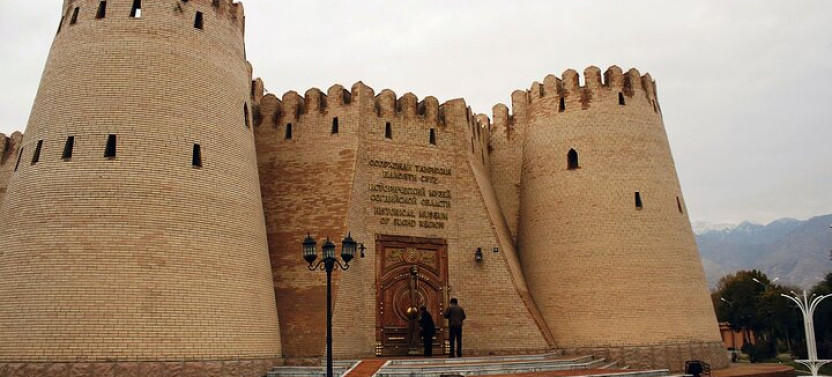
In this historic destination, we will see the oldest and most fascinating city in Central Asia - Khujand. We will visit the ancient Khujand Fortress, Jomi Mosque, Panjshanbe Bazar, Arbob Palace, and the beautiful Tajik Sea. The incredible city of Khujand is situated on the banks of the majestic Syr Darya, nestled below the Kayrakkum reservoir in the breathtaking Fergana Valley. Khujand is one of the oldest cities in Central Asia! Some sources even believe it was founded as far back as the 7th-6th centuries BC. It was conquered by none other than Alexander the Great himself! He rebuilt and strengthened it, calling it Alexandria Eskhata (Extreme). The Khujand Fortress was founded in the VI—V centuries BC. According to the fascinating archaeological dates, the Khujand fortress was first surrounded by a massive bulk rampart, later by a wall of remarkable thickness made of raw material. The city and the citadel — are two of the most important components of ancient Khujand.
At a Glance
The experience, in brief
- Khujand Fortress: Explore ancient fortifications from the 6th5th centuries BC
- Jami Mosque: Visit a stunning 16thcentury mosque with a multicolumn hall
- Panjshanbe Bazar: Experience a lively market with unique Soviet and Oriental architecture
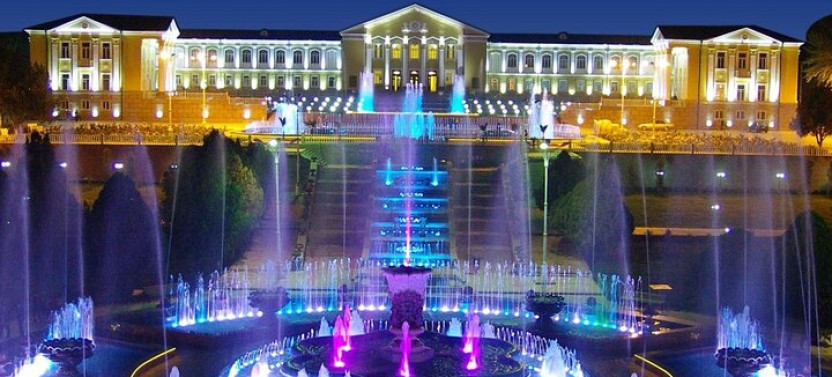
- Arbob Cultural Palace: Discover a historic palace linked to Tajik independence
- Kayrakum Reservoir: Enjoy the "Tajik Sea," a scenic lake with abundant birdlife
- Bahoriston Sanatorium: Relax by the pristine Kayrakum reservoir at a modern sanatorium
Detailed Itinerary
The journey, in full
At 08:00 Pick up from Tashkent and departure to Khujand. Khujand is the second largest city in Tajikistan, an important transport hub, political, economic, cultural and scientific center of the country. Khujand is located on the banks of the Syr Darya, below the Qayroqqum reservoir, in the Fergana Valley. Khujand is one of the oldest cities in Central Asia, according to some sources, the foundation of the city falls on the VII-VI centuries BC. It was conquered by Alexander the Great, who rebuilt and strengthened it, calling Alexandria Eskhata (Extreme). We will start our sightseeing from Khujand Fortress The Khujand Fortress was founded in the VI—V centuries BC. According to the archaeological dates, the Khujand fortress was first surrounded by a bulk rampart, later by a wall of considerable thickness made of raw material. The city and the citadel — components of ancient Khujand, had separate fortress walls surrounded by a wide and deep moat filled with water. The citadel was located on the bank of the Syr Darya at the Rabad gate. The medieval Khujand fortress was considered one of the most fortified in Central Asia. Nex object is the Jami Mosque, it is a complex of Sheikh Muslihiddin, a monument of folk architecture of the XVI century. The object is located on the western side of Panjshanbeh Square. The facade of the building faces Shark Street. The mosque was built in 1512-1513. Then we will visit Panjshanbe Bazar is one of the attractions of Khujand, is located in the center of Khujand, and opposite it stands the mausoleum of Sheikh Muslihiddin. The bazar consists of the main pavilion and many shops, tents, and shops adjacent to it. It is always very noisy here, as not only residents of the city come to shop, but also guests from nearby villages. The main feature of the Panjshanbe Bazar is its unique architecture and decor. After lunch we will drive to the Arbob Cultural Palace. it is a building in Khujand, Tajikistan, the former headquarters of a Soviet collective farm, built in the 1950s and modelled on the winter gardens of Peterhof, St Petersburg. The main building consists of three wings - with an ornate theatre seating 800 people in the main wing. The South wing currently houses a museum which tells the history of Arbob and of collectivization and the soviet empire in Tajikistan. The building had particular significance in 1992, when it was the site for the meeting of the Tajik Soviet which officially declared independence from the Soviet Union. It was the site where the Tajik flag was chosen. More recently, in the late 1990s it was also the site where peace conferences following the Tajik civil war were held. Kayrakum also spelled variously as Qayroqqum, is a large artificial lake in Sughd Province, in northwestern Tajikistan. In 2016, the reservoir was renamed Tajik Sea (Tajik: Баҳри Тоҷик) by the country's parliament. The reservoir lies in the western part of the Fergana Valley on the Syr Darya river. The provincial capital of Khujand lies about 15 km west of the dam. A 1150 km2 tract of land encompassing the reservoir and its surrounds has been identified as an Important Bird Area (IBA) by BirdLife International because it supports 4 significant numbers of the populations of various bird species, either as residents, or as overwintering, breeding or passage migrants. In a vivid oasis of Sogd valley of Tajikistan, on a shore of a purest Kairakkum reservoir, which is also called the Tajik sea, is located a new sanatorium “Bahoriston”. Way back to the border and seeing off with travelers
Your Itinerary
Your day, step by step
Day 1
Tashkent
Local Flavor at Panjshanbe Bazaar.
Continued
Tashkent
Sightseeing at Arbob Cultural Palace.
Continued
Tashkent
Sightseeing at Kayrakkum Reservoir.
Before You Go
What to know before booking
Included
Private transportation All Fees and Taxes Licensed guide/driver
Not Included
Alcoholic Beverages Tips & Gratuity Personal expenses
What to Bring
Passport required Public transportation nearby Comfortable clothing and footwear Camera and bag for essentials
Restrictions
Not suitable for pets
Meeting & Pickup
We can pick up travelers from Tashkent, from hotels - let us know the details when booking
Languages Offered
[object Object]
Planning Notes
Hotel pickup offered: No Confirmation: Automatic
 Featured Travel