
← Back to South Korea Experiences
Busan · Gyeongsang · South Korea
Busan 3 Day Tour
Starting From
From $509.33 per person
Current Project Expedition rate
Experience inventory, live availability and secure booking provided by
Project Expedition
The Experience
What your day looks like
Busan 3 day tour including all tourist destinations of Busan.
At a Glance
The experience, in brief
- Songdo Sky Walk
- Gamcheon Culture Villiage
- Yongdusan Park, one of the most popular mountains in Busan
- BIFF Square and Gukje Market
- Jagalchi Market
- Yeongdo Bridge
- Samgwangsa Temple
- The Shinsegae Centum City Department Store
- Taejongdae Recreation Cruise
- Taejongdae Recreation Area
- National Maritime Museum
- UN Memorial Cemetery
- Oryukdo Skywalk
- Haedong Yonggungsa Temple
- Dalmaji Gil Road
- Beomeosa Temple
- Traditional Dongnae bu Government Office
- Dongnaeeupseong
- Bokcheon Museum
- Mountain Hwangnyeongsan Observatory
- Marine City
- Dongbaekseom Island
- Haeundae Beach
- Haeundae Aquarium
Your Itinerary
Your day, step by step
Day 1
Busan
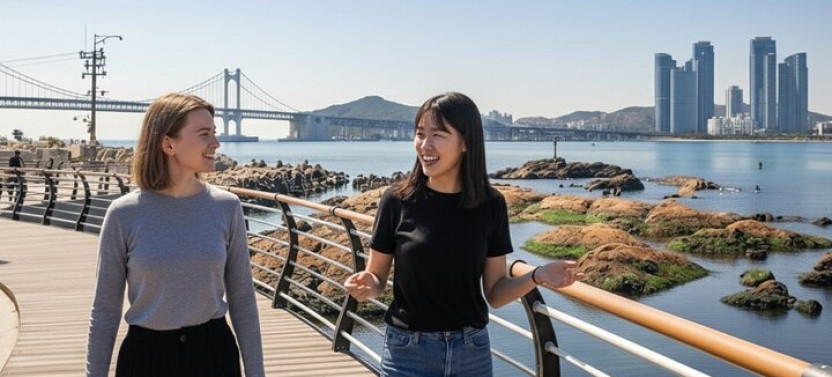
Hiking. Songdo Sky Walk: The skywalk has drawn attention as the first of its kind in Korea, and for its long, curving trail. To date, the first section of the walk has been installed and measures 104 m, stretching around Geobukseom Island. When completed next February, the Songdo Sky Walk will set a new record as the longest ocean walk in Korea at 296 m in length and 2.3 m in width. The skywalk will also have a viewing platform stretching out into the water to give visitors a spectacular view of the coastline. A transparent tempered glass was also used in sections of the flooring for the walk, allowing for clear views of the waters below and giving people the true sensation of walking on water. It is positioned 5.5
Continued
Busan
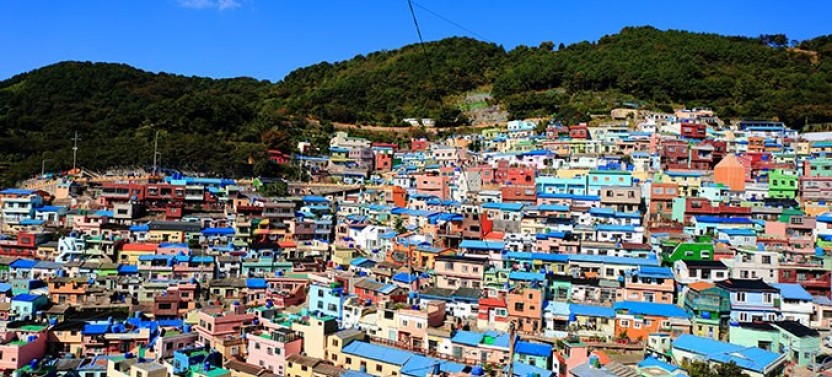
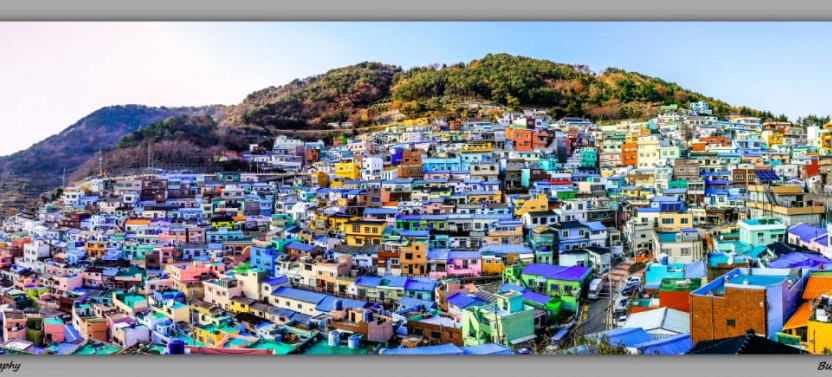
Local Flavor at Gamcheon Culture Village. Gamcheon Culture Villiage: Gamcheon Culture Villiage is formed by houses built in staircase-fashion on the foothills of a coastal mountain, earning this village the nickname of "Machu Picchu of Busan." The many alleys cutting through this community are vibrantly decorated with murals and sculptures created by the residents.
Continued
Busan
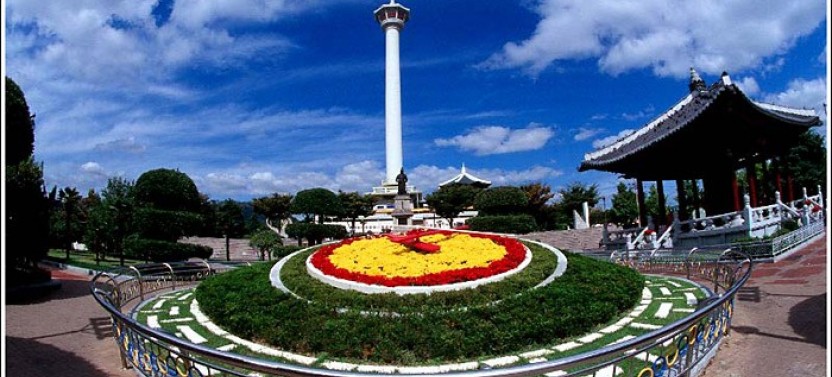
Sightseeing at Yongdusan Park. Yongdusan Park, one of the most popular mountains in Busan. Yongdusan in downtown Busan is one of the 3 well-known mountains in Busan. Its old name is Songhyunsan, which means a mountain has a view of the sea through the dense fine tree forest. Later the name has changed into Yongdusan. It came from its shape, which is similar to dragon head and people thought it has a spirit to defeat enemies coming over the sea.
Continued
Busan
Local Flavor at Gukje Market. BIFF Square and Gukje Market: Busan’s modern movie district was originally little more than a pair of cinemas that were built following Korea’s liberation from Japanese colonial rule over half a century ago. However, major renovations took place ahead of the first Busan International Film Festival (BIFF) in 1996, and the newly transformed district was named BIFF Square on August 14, 1996.
Continued
Busan
Local Flavor at Jagalchi Market. Jagalchi Market: The Jagalchi Market is Korea's largest seafood market. After the Korean War, the market solidified itself as a fish market. Most of the people who sell fish are women, so the women who sell here are called 'Jagalchi Ajumma,' 'Ajumma' meaning middle-aged or married women. This market represents Busan and is famous throughout the country. If you visit you can eat fresh raw fish right at the market. Even these days you can see women selling mackerel, sea squirts (ascidians) and whale meat on wooden boxes along the road.
Continued
Busan
Sightseeing at Yeongdodaegyo. Yeongdo Bridge: Yeongdodaegyo Bridge connects Jung-gu and Yeongdo-gu districts in Busan. Constructed in November 1934, it was the first island-land connecting bridge in Busan and the only single-leaf bascule bridge in Korea. The bridge lifts up on one side to make way for large vessels.
Continued
Busan
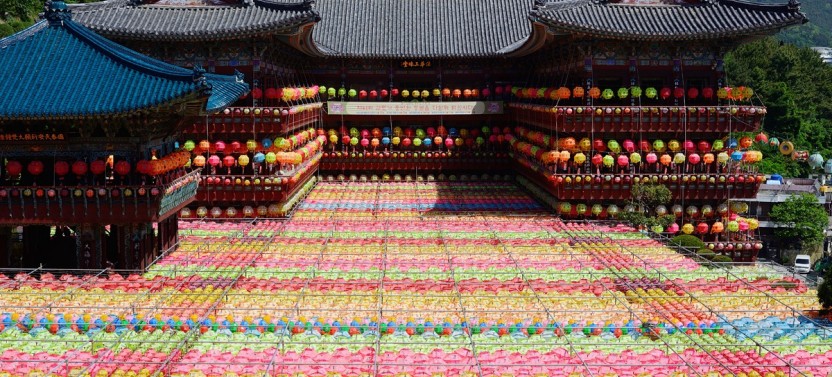
Sightseeing at Samgwangsa Temple. Samgwangsa Temple: Samgwangsa Temple is to hold its famous lantern festival, which has been attracting over a million visitors each year. CNN Travel also voted this temple to be one of the best spots you must visit in Korea. The festival is known for a variety of lanterns of over 3 millions kinds. The lanterns with hope and sincere love toward Buddha will create spectacular views, watching a wave of lanterns lighten up the dark sky with their brilliant colors.
Continued
Busan
Sightseeing at Shinsegae Centum City Department Store. The Shinsegae Centum City Department Store: The Shinsegae Centum City Department Store is registered in the Guinness World Records as the largest shopping complex in the world. The department store has a countless number of items all under one roof. Visitors can also enjoy numerous entertainment options in the complex. Shinsegae, which opened the first department store in Korea, reflects decades of retail experience in this flagship location. Some of the various entertainment facilities available include a spa and an ice rink.
Continued
Busan
Accommodation not included.
Day 2
Busan
Boating at Taejongdae. Taejongdae Recreation Cruise. Designated as a Busan monument, along with Oryukdo Island, Taejongdae represents Busan, and is especially famous for its rock beach. Featuring its highest peak at 250 meters, there are forests of pine trees and 200 other varieties of trees. Taejongdae was named after the 29th king of the Silla Kingdom (57 BC-AD 935), King Taejong Mu-Yeol (604-661). King Taejong traveled to many places but this was the place he enjoyed shooting arrows the most.
Continued
Busan
Sightseeing at Taejongdae. Taejongdae Recreation Area. Designated as a Busan monument, along with Oryukdo Island, Taejongdae represents Busan, and is especially famous for its rock beach. Featuring its highest peak at 250 meters, there are forests of pine trees and 200 other varieties of trees. Taejongdae was named after the 29th king of the Silla Kingdom (57 BC-AD 935), King Taejong Mu-Yeol (604-661). King Taejong traveled to many places but this was the place he enjoyed shooting arrows the most. Under the lighthouse of this resort is a rock called Sinseon Rock, named after the myth that gods and goddesses came down here to relax. At this rock is a figure called Mangbuseok, named after the story of a woman who waited for her husband who had been taken to Japan. Taejongdae is also famous for the ritual of praying for rain, performed when there are droughts, and rain on the 10th day of the fifth lunar month is called the "Taejong Rain." On days with clear skies you can see Japan’s Tsushima Island from the observatory.
Continued
Busan
Sightseeing at Korea National Maritime Museum. National Maritime Museum. Exhibitions at the National Maritime Museum encompass all aspects of marine and ocean life. These include the culture, history, famous figures in the industry, maritime vessels, ocean creatures, ocean life experience, maritime industry, marine territory and development and ocean science. It is by far one of the top maritime museums in Korea. The museum holds over 14,000 historic items and relics that have witnessed the history and are relevant to the future of ocean life. These are on display in the eight different permanent exhibition halls, the special exhibition hall and the children's exhibition hall. The museum also has a library, aquarium, grand auditorium, outdoor performance stage, and a 4D theatre offering a multi-cultural experience to visitors.
Continued
Busan
Sightseeing at United Nations Memorial Cemetery. UN Memorial Cemetery: The UN Memorial Cemetery in Korea honors UN soldiers from 16 countries that were killed in battle during the Korean War from 1950-1953. This serene park spreads across a grassy plain area of 135,000 m2. Some of the sites and memorials include Memorial Service Hall, Memorabilia Hall, 2 Turkish Monuments, Greek Monument, Australian Monument, British Common Wealth Monument and 2 ponds. The Memorial Service Hall and the Memorabilia Hall were constructed in 1964 and 1968 respectively. The citizens of Busan dedicated the Main Gate in 1966. There are many annual events held here, some of the key events include April’s Tributary Ceremony of the Veterans of the Korean War, May’s American Memorial Day, June’s Korean Memorial Day, and October’s UN Ceremony Day.
Continued
Busan
Hiking. The regional name in olden times for the area of Oryukdo Skywalk was Seungdumal, as the shape resembles a saddle, and it was originally called Seungduma as well as Jallokgae by residents and women divers. The construction of Oryukdo Skywalk finished on September 12, 2012, at the Seungdumal area, which is regarded as the dividing point between the East Sea and the South Sea, and started operating on October 18, 2013, with the theme of "Walking over the sky.”
Continued
Busan
Local Flavor at Haedong Yonggungsa. Haedong Yonggungsa Temple: Haedong Yonggungsa Temple is situated on the coast of the north-eastern portion of Busan. This superb attraction offers visitors the rare find of a temple along the shoreline; most temples in Korea are located in the mountains. Haedong Yonggungsa Temple was first built in 1376 by the great Buddhist teacher known as Naong during the Goryeo Dynasty. Haesu Gwaneum Daebul (Seawater Great Goddess Buddha), Daeungjeon Main Sanctuary, Yongwangdang Shrine, Gulbeop Buddhist Sanctum (enclosed in a cave), and a three-story pagoda with four lions can all be seen looking out over the ocean. The main sanctuary of the temple was reconstructed in 1970 with careful attention paid to the colors that were traditionally used in such structures. On the right-hand side, inside the cave, is a uniquely designed Buddhist sanctum, while situated just in front of the main sanctuary is a three-story pagoda with four lions. The four lions are symbolizing joy, anger, sadness, and happiness. Other special sites at the temple are the 108 stairs and stone lanterns lining the rocky landscape. After going down the 108 steps, one will be delighted with the beauty of the temple. Midway down the 108 steps, one can stop and enjoy the calming sounds of the waves, and view the majestic sunrise. Many people often come to this spot on New Year's Day to make a wish for the new year as they watch the sun come up. April is an especially beautiful time of year with cherry blossoms in full bloom. The birth of Buddha is also celebrated in the fourth month of the lunar calendar and offers a spectacular night view as the temple area is aglow with lit lanterns.
Continued
Busan
Sightseeing at Dalmaji-Gil Road. Dalmaji-Gil Road: Dalmaji-Gil Road is a small walkway on the corner to Songjeong Beach, located just beyond Haeundae Beach. The road is lined with beautiful cherry blossoms and pine trees, on the slope of Wausau Mountain. The landscape, with the blue sea, sandy seashore, and pine trees, is beautiful enough to be the representative place of this area for a long time to come. This walk became famous as a relaxing place in the summer ever since Haeundae Beach opened in 1965. On days with clear skies, you can see Japan's Tsushima Island from the observatory. There is a spa and other facilities nearby, making it a great place to visit for people who want to relax and enjoy their free time, not only in the summer but throughout the year.
Continued
Busan
Accommodation is not included.
Day 3
Busan
Sightseeing at Beomeosa Temple. Beomeosa Temple. Beomeosa Temple is located at the edge of Mt. Geumjeongsan, a famous mountain in Busan. About 1,300 years ago it was constructed by monk Ui Sang in the 18th year (678) of King Munmu (reign 661
Continued
Busan
Sightseeing. Traditional dongnae-by government office. Built in 1636 and used as a goverment office till early 1970s.
Continued
Busan
Local Flavor. Dongnaeeupseong. The Dongnaeeupseong History Festival was selected as Busan's best festival for four consecutive years. The festival was also awarded the grand prize during the 4th K-Festival and is considered an excellent example of teaching history through an experiential festival. The festival features the customs and traditions of Dongnae County, focusing on the noble spirit of patriotism. The festival has a high degree of both educational and entertainment values, making it one of the nation's unique 'edutainment' festivals.
Continued
Busan
Sightseeing at Bokcheon Museum. Bokcheon Museum. Bokcheon Museum, an archaeological museum in Busan, opened its doors to the public on October 5th, 1996 as a tribute to the long-honored history of Busan from the Samhan Era to the Samguk (Three Kingdoms) Era. The museum displays relics and artifacts excavated from the ancient burial ground in Bokcheon-dong. As many as 169 pieces of ancient helmets, diverse types of earthenware and iron-made weapons found in a series of seven excavations are on display throughout the museum. The array of relics and tombs discovered in the Bokcheon-dong ancient burial ground, designated as Historic Site No. 237, are essential to solving the mystery of the Gaya Kingdom, which remains an uncharted, secret land. Since opening, the museum has been conducting further research at the site of the burial grounds and remains in the local area to better understand the antiquated history and culture of Busan as well as the ancient kingdom of Gaya. The museum, as a reputable venue for historical education and exploration, also holds academic seminars and special exhibitions to share the research results and achievements with scholars and the community alike.
Continued
Busan
Sightseeing at Hwangnyeongsan Mountain. Hwangnyeongsan Mountain. Hwangnyeongsan Mountain is located in the heart of Busan and stretches across Busanjin-gu, Nam-gu, and Suyeong-gu Districts. With an altitude of 427m, the mountain is the second highest mountain in the Geumnyeon Mountain Range. The mountain is mostly made up of andesite and the summit is relatively flat. Some parts of the mountain are also characterized by exposed bedrocks. The northeast part of Hwangnyeongsan Mountain is connected to Geumnyeonsan Mountain. Because of its geologic age, the terrain has been dissected by river valleys, resulting in less sharp surfaces. Several smaller hills and ridges can also be found scattered around the area. Hwangnyeongsan Mountain isn't very high so it only takes about two to three hours to get to the top. At the foot of the mountain, one can find a citizen's recreation area and a youth training center. Choosing which mountain trail to take depends on the transportation options available to you. The bongsudae (beacon fire station) constructed on top of the mountain was an important means of communication for the military in 1422. This bongsudae was used to communicate with the bongsudae on Haeundae's Ganbiosan Mountain (east), Gubongsan Mountain (west), and Beomeosa Temple and Gyemyeongsan Mountain (north). Every year, events such as the sansinje (ritual for the mountain god) and the beacon lighting ceremony are held on Hwangnyeongsan Mountain.
Continued
Busan
Sightseeing. Marine City. View of Modern constructions of East Busan.
Continued
Busan
Sightseeing at Dongbaekseom Island. Dongbaekseom Island: Dongbaekseom Island (Island of Camellias) is an island located off one end of Busan's famous Haeundae Beach. Although the years of sedimentation have connected the island to the mainland, Dongbaekseom was originally an island and is still referred to as one. Dongbaekseom is easy to navigate thanks to the walking path that is built around it. The island has several different points of attraction, including the monument inscribed with a poem of scholar Choi Chi-won, the mermaid statue based on the legend of Princess Hwagok, and the Nurimaru APEC House. It also offers fantastic views of the Busan shoreline towards Mipo, Dalmaji Hill, Gwangangdaegyo Bridge, and Oryukdo Island. As the name suggests, camellias burst into bloom everywhere on the island from winter to spring.
Continued
Busan
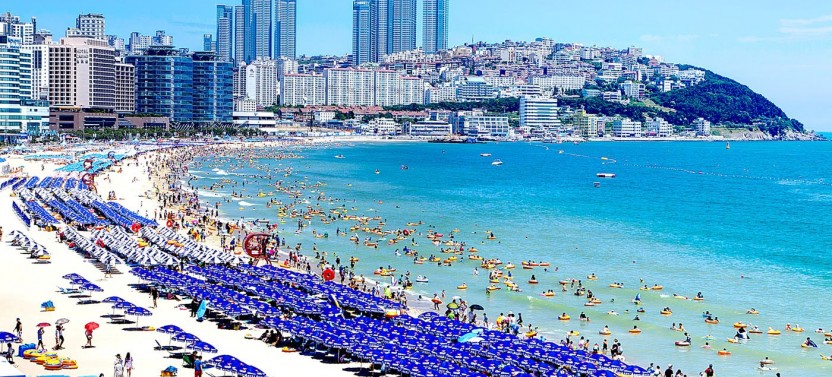
Sightseeing at Haeundae Beach. Haeundae Beach: Haeundae Beach is the most famous beach in Busan. The white sand beach is roughly 1.5km long, over a 30
Continued
Busan
Sightseeing at Sea Life Busan Aquarium. Haeundae Aquarium. Sea Life Busan Aquarium is an aquarium located in Haeundae Beach, South Korea. There are about 250 species and up to 35,000 marine animals on display.
Before You Go
What to know before booking
Included
English speaking tour guide All Entrance fees Tour Van/Bus will pick you up from your Hotel/guest house if needed Government licensed and insured guaranteed The photographer is available for free
Meeting & Pickup
Pick you up from your hotel/guest house is available.
Planning Notes
Hotel pickup offered: Yes Confirmation: Manual By Business
 Featured Travel