
← Back to Romania Experiences
Bucharest · Ilfov County · Romania
8 Days in Transylvania - Dracula Beyond the Legend
Starting From
From $2,319.07 per person
Current Project Expedition rate
Experience inventory, live availability and secure booking provided by
Project Expedition
The Experience
What your day looks like
We have prepared a true Dracula Tour for you to fully enjoy. The tour includes the real Dracula Castle, as well as sightseeing and heritage experiences, all organized in a day-by-day itinerary. Those naturally drawn to mystery will seek the legend of Transylvania’s most famous vampire—Count Dracula, a vampire of incredible powers. Over eight days, you will visit some of the most important landmarks related to the legendary vampire and his origins on one of the best Transylvania tours.
At a Glance
The experience, in brief
- Explore Bucharest, Snagov Monastery & Royal Court
- Visit Transylvanian castles: Bran, Corvin & Rasnov
- Explore Medieval towns: Sibiu, Sighisoara & Viscri
Your Itinerary
Your day, step by step
Day 1
Bucharest
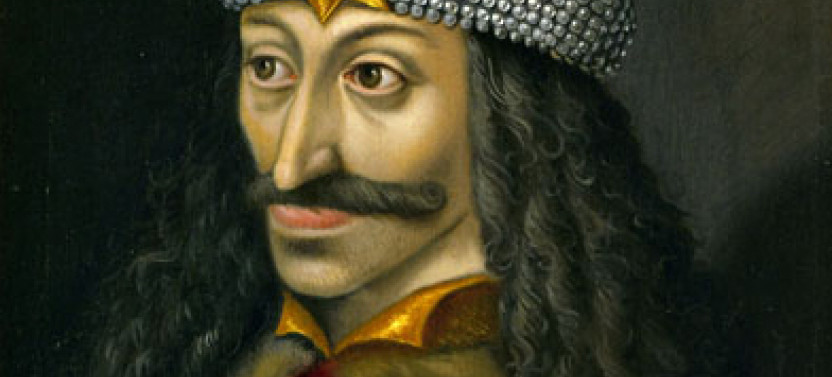
Sightseeing at Palace Of The Parliament. Welcome to Bucharest, Romania! Romania's capital city is first mentioned in documents contemporary with Vlad Tepes (Vlad the Impaler). Through his deeds and methods of ruling, the prince inspired the legend of Dracula. Throughout this tour in Romania you will learn the truth behind Vlad Tepes Voivod, the descendant of an ancient Wallachian family, and how he came to be an inspiration for the novel "Dracula" by Bram Stoker. The city tour will start with a visit to Bucharest's famous attraction, the Palace of Parliament. Also known as the House of the People (Casa Poporului), the centrally located massive construction, is the largest administrative building in the world. Being constructed between 1984 and 1997, it currently hosts the Parliament of Romania. The tour continues with a sightseeing tour of Bucharest's Old Town (Centrul Vechi). The area is considered the heart of the city thanks to its beautiful architecture and its lively atmosphere, filled with cafes, restaurants, and different tourist attractions. In the surroundings, you can sightsee Curtea Veche (the Old Court), the first royal court in Bucharest and one of Vlad Tepes's residential place. In the middle of the ruins, you can see the bust of Vlad the Impaler.
Continued
Bucharest
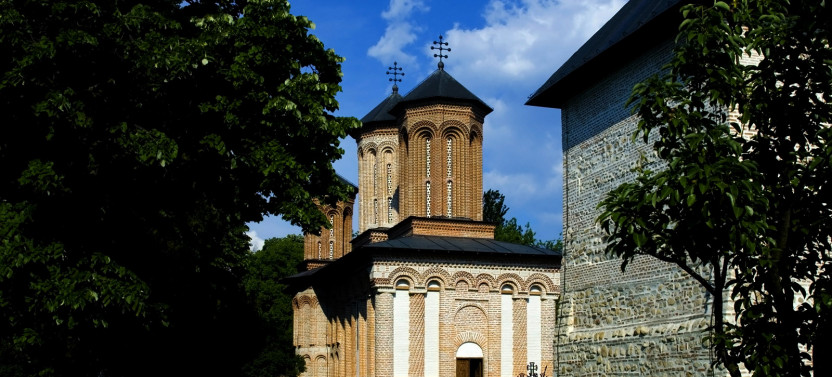
Sightseeing. The tour from Bucharest continues with a trip to Targoviste, the former capital of Wallachia, back in the medieval times. Targoviste served as a Saxon colony throughout the 13th century, and due to its economic growth, it became a secondary residence for Wallachian princes during the 14th century. The Royal court was moved from Curtea de Arges to Târgoviște in 1431, and it was refurbished continuously over the years. The princely court was rather small before Vlad the Impaler restructured it to stand against enemy attacks, later on constructing the Tower of Chindia. In 1395, the city was sieged and set on fire by Bayezid I, and in 1462 the Ottoman invasion was only stopped from reaching the town by Vlad the Impaler's Night Attack. Targoviste city tour, together with Princely Church and Chindia Tower, is an introduction into the life and background of Vlad Tepes.
Continued
Bucharest
Overnight on Transfagarasan.
Day 2
Bucharest
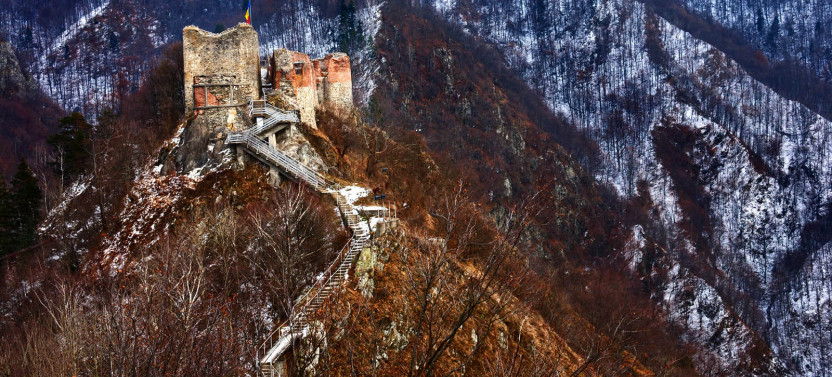
Archaeological Exploration at Poenari Castle. Next on, you will head to Poenari Fortress. The construction, which was built at the beginning of the 13th century, served as the residence for plenty of people. Later on, it was restored by Vlad the Impaler and became one of his main fortresses. The citadel is located at an altitude of over 800 m, and to reach it, there are more than 1400 stone steps to climb. Often called the Vlad Tepes "Eagle's Nest," the fortress has been a strategic point thanks to its location.
Continued
Bucharest
Sightseeing at Transfagarasan. Your day concludes with arriving at your accommodation "Valea cu Pesti," a marvelous hotel located near Transfagarasan Road. There you can relax and get ready for a new day of the Dracula Tour.
Day 3
Sibiu
Sightseeing at Astra National Museum Complex. Starting your tour to Transylvania, the next stop on the itinerary is visiting Sibiu. Sibiu is one of the medieval towns that, more than 600 years ago, the story of Dracula started to spread through the noblemen and merchants that inhabited the city. Meanwhile there, you will visit Astra Museum, an open-air museum that is home to original Romanian monuments. There you can take a ride with a traditional wooden carriage as well. The museum is home to more than 300 traditional buildings and thousands of classic household objects, structured in five large sectors. For the rest of the day, you will take a Sibiu walking tour to see how the city beautifully blends tradition with multicultural and modern elements. The journey begins in the Main Square of the town and continues with visiting some of the most famous landmarks in Sibiu: Brukenthal Museum, the "Holy Trinity" Roman Catholic Cathedral, and the Huet Square with its Evangelical Church. You will then have a couple of hours to explore the city by yourself to immerse with this gorgeous, historic city. For your free time in Sibiu, we prepared a list of things to do.
Continued
Bucharest
Overnight in Sibiu.
Day 4
Bucharest
Sightseeing at Corvin Castle. The fourth day of your Dracula Tour will begin with visiting one of Dracula's castle in Transylvania, Corvin Castle (or Hunyadi Castle). According to the legend, Vlad the Impaler was imprisoned in here for seven years. Located in Hunedoara County, Corvin Castle is one of the largest medieval castles in Eastern Europe. It displays an impressive Renaissance-Gothic architecture, an inner courtyard, and gorgeous soaring towers and bastions surround it. This is not the castle from Borgo Pass in the Carpathian Mountains, and since Bran Stoker never been in Transylvania is more probably that description to coincide with the Corvin castle architecture. Vlad spent his childhood with the future king of Hungary, Matei Corvin and the Corvin Castle is the place where they receive a military education.
Continued
Bucharest
Archaeological Exploration. You will then head on to Orastie Mountains to visit the ruins of Sarmizegetusa Regia, a famous Dacian fortress. Sarmizegetusa Regia was the leading military, religious and political center of the Dacian Empire at the time. First mentioned in 1575, the fort had a citadel, residential areas, workshops, and a sacred zone. The sacred zone is one of the most significant Dacian Sanctuaries, its layout being similar to Stonehenge. On the site were discovered seven temples: two round and five rectangular temples and an andesite altar. However, only the foundations of these monuments have been preserved until today. The guided tour continues with a trip to Densus Village in Hunedoara. Once there, you can visit the Densus Church, considered one of the oldest churches in Romania, that religious services are still performed. The church is supposedly constructed sometimes in the 7th century and the murals inside date from back in the 15th century, portraying Jesus Christ wearing traditional Romanian clothing. One hypothesis claims that Densus Church was a pagan temple because of: the altar that is closer to South than East, the roof that is shaped like a dove, and the lion statues that are united by their tails. Another hypothesis is that the church was built as a mausoleum to the Roman general Longinus Maximus.
Continued
Bucharest
Overnight in Deva.
Day 5
Alba Iulia
Sightseeing. Your day will begin with a guided tour of Alba Iulia, a city situated at the center of Romania. A famous landmark is Alba Carolina Citadel, the largest medieval citadel in Romania, built between 1715 and 1738. The site was previously home to the other two fortifications: the Roman Castle of Legio XIII Gemina and the Bălgrad Medieval Citadel. The medieval fortress was part of a fortification system created by Prince Eugene of Savoy designed to ensure the defenses of the newly conquered provinces of the Habsburg Empire. Alba Carolina Citadel is, therefore, one of the most representative Vauban bastion fortifications in Transylvania. It is one of the Roman Empire's main fortifications in the area as well.
Continued
Turda
Sightseeing. The next stop will be at Turda, where you will visit the salt mine that covers an area of almost 45 kilometers. Turda has been used for salt mining for hundreds of years, mentioned for the first time in 1075. Today Turda Salt Mine is a touristic destination being one of the fascinating underground places in the world. Mine is the perfect location for a fun family trip. Mini-golf, ping pong, bowling, Ferris Wheel rides, boat rides on the underground lake, all these entertainment activities are available at Turda Mine.
Continued
Bucharest
Overnight in Cluj Napoca.
Day 6
Bucharest
Sightseeing at Biertan Fortified Church. You will depart from Cluj and head to Biertan Fortified Church, a UNESCO World Heritage Site, which is located in a nearby Saxon village. Surrounded by three tall defensive walls, the church dates back from the 13th century and features a late-gothic architecture, representing a stunning medieval masterpiece.
Continued
Sighisoara
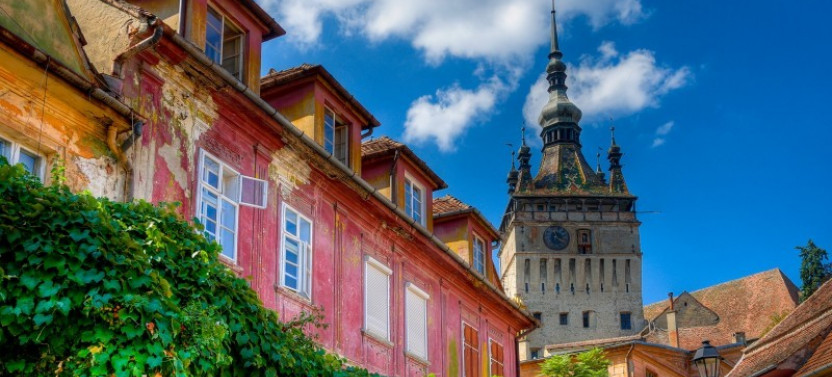
City/Town Tour at Historic Centre of Sighișoara. The guided tour continues with the medieval citadel of Sighisoara, the only inhabited medieval fortress in Europe and a UNESCO World Heritage Site. Take a walk along the fortress's winding cobblestone streets lined with historical buildings until you reach the Clock Tower, the symbol of the city. The tower is home to a well preserved medieval weapon museum and a torture chamber. The citadel was built in the 12th century and further fortified in the 15th century. For those interested in Dracula's birth, Sighisoara medieval citadel is known to be the birthplace of Vlad the Impaler. In this small town of Transylvania, in the house of Vlad Dracul, Vlad spent his first years of life, under the protection of his influenced relatives. Therefore, you will have time to visit the place where the ruthless Wallachian ruler lived the first years of his life. Overnight in Sighisoara.
Continued
Bucharest
Overnight in Sighisoara.
Day 7
Brasov
City/Town Tour at St. Nicholas Church, Brașov. The first destination for the day is the city of Brasov, a highly visited location in Romania. Once there, you will take a city tour to discover some of Brasov's numerous attractions. You will go on a walk on one of the narrowest streets in Eastern Europe (Strada Sforii), explore the Council Square, and delve into the secrets of the gothic style church, the Black Church. The city of Brasov was one of the wealthiest medieval cities in Transylvania and today one of the main touristic sites in Transylvania.
Continued
Bran
Sightseeing at Bran Castle. The tour continues with visiting Bran Castle also known as Dracula's Castle, one of the spookiest medieval castles in Europe - often referred to as the home of Dracula, the character from Bram Stoker's novel. Bran Castle was built in the 13th century on a 60-meter cliff, guarding the most important access route into Transylvania. Here will find out more about the Romanian royal family, the connection with the Queen Mary, and the new age stories about the castle. You will depart from the Castle of Dracula and head back to the historical region of Wallachia- the land reigned by Vlad the Impaler.
Continued
Bucharest
Sightseeing at Rasnov Citadel. If the time allows, will see on the way to the "Dracula castle," another fortress that dominates the surroundings: Rasnov fortress, first dated in medieval documents in 1335. A Hollywood sign marks the hill where the fortress is today, and invite the tourists to a castle tour. The râșnov citadel was built to protect the Saxon locals against Tatars and Turks invasions. The fortress resists at least five attacks that can be compared with a combination of an earthquake, fire, and brutal war.
Continued
Bucharest
Sightseeing at Snagov Monastery. The final stop for the day is Snagov Monastery, located on the small Snagov Island, where Vlad the Impaler is supposedly buried. *The place where Vlad was buried is uncertain, and many stories and legends are hovering around. According to the legend, Vlad Tepes was not killed by Turks, but he was freed by his daughter and brought to Italy. The most widely accepted legend depicts that Vlad the Impaler could not be Christianly buried after his assassination because of the rival aristocratic families. As a consequence, the Snagov Monastery monks stole his body in secret, to bury him in a proper traditional way.
Continued
Bucharest
Overnight in Bucharest.
Day 8
Bucharest
Transportation. After a seven day tour in Romania, with castles, fortified church and legends about vampire in Transylvania, we hope that in the end will discover a misterious country with real people. After breakfast, you will be transferred to the airport according to your flight hours.
Before You Go
What to know before booking
Included
Transfer in a modern car/minivan from arrival till departure An informative, friendly and professional guide that will give you a comprehensive tour to understand the legend of Count Dracula and history of voivode Vlad the Impaler Entrance fees for the sights included in the itinerary
Not Included
Airline tickets Travel insurance Meals, other than mentioned in the itinerary and alcoholic beverages Entrance fees to monuments/sights other than those mentioned in the itinerary Various expenses such as room service, beverages, personal calls, souvenirs, etc
Meeting & Pickup
We will meet you at the airport upon your arrival.
Planning Notes
Minimum age: 5 Hotel pickup offered: No Confirmation: Manual By Business

 Featured Travel