
← Back to Jordan Experiences
Amman · Jordan
7 day Jordan’s Majestic Journey Tour
Starting From
From $2,532.68 per person
Current Project Expedition rate
Experience inventory, live availability and secure booking provided by
Project Expedition
The Experience
What your day looks like
This 7-day guided tour takes you on an unforgettable journey through the highlights of Jordan, from the ancient Roman ruins to the stunning desert landscapes and the therapeutic waters of the Dead Sea. Begin your adventure in Amman, where you’ll explore the city’s historical landmarks and enjoy a local food tasting experience. Next, delve into the ancient world with visits to the remarkable ruins of Jerash, the medieval Ajloun Castle, and the sacred sites of Madaba and Mount Nebo, before continuing to the breathtaking Petra. Spend a full day discovering this world-renowned archaeological site, with its intricate rock-cut architecture and rich history. On Day 5, explore Little Petra before venturing into the Wadi Rum desert for a 2-hour Jeep safari. Experience the stunning desert scenery and dramatic landscapes that have been the backdrop for many movies. Afterward, enjoy the serenity of the Dead Sea, floating in its mineral-rich waters. The tour concludes with a final day of relaxation by the Dead Sea, followed by a transfer back to Amman Airport for your departure.
At a Glance
The experience, in brief
- Walk through one of the bestpreserved Roman cities
- Visit the historic Muslim castle with stunning views over the Jordan Valley
- Experience the aweinspiring Rose City, a UNESCO World Heritage site
Your Itinerary
Your day, step by step
Day 1
Amman
Transportation. Welcome to Jordan! Day 1 Amman Queen Alia International Airport – Amman: Upon arrival at Amman Queen Alia International Airport, our representative will meet you before the passport control at your terminal and take you through immigration taking care of the visa arrangements and passport checking. Your driver will be waiting for you outside the airport, and take you to your hotel in Amman
Continued
Amman
Overnight.
Day 2
Petra Town
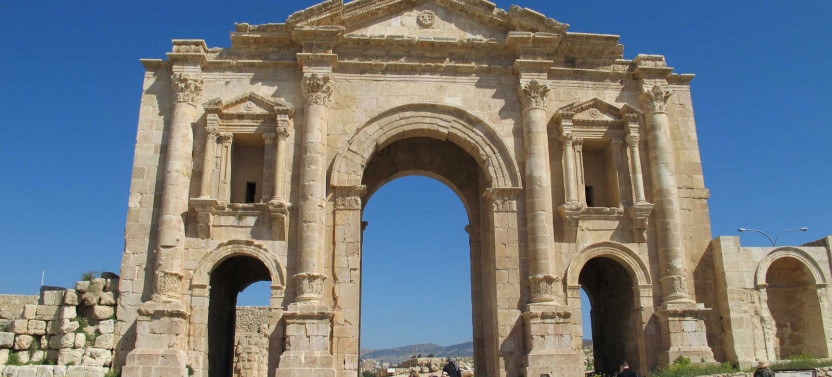
Local Flavor. Day 2 Amman – Jerash: Breakfast at the hotel, drive to visit a close second to Petra on the list of favorite destinations in Jordan is the ancient city of Jerash, which boasts an unbroken chain of human occupation dating back more than 6,500 years. Jerash lies on a plain surrounded by hilly wooded areas and fertile basins. Conquered by General Pompey in 63 BC, it came under Roman rule and was one of the ten great Roman cities of the Decapolis League. The city's golden age came under Roman rule, during which time it was known as Gerasa, and the site is now generally acknowledged to be one of the best-preserved Roman provincial towns in the world. Hidden for centuries in sand before being excavated and restored over the past 70 years, Jerash reveals a fine example of the grand, formal provincial Roman urbanism that is found throughout the Middle East, comprising paved and colonnaded streets, soaring hilltop temples, handsome theatres, spacious public squares and plazas, baths, fountains and city walls pierced by towers and gates. Beneath its external Graeco-Roman veneer, Jerash also preserves a subtle blend of east and west. Its architecture, religion, and languages reflect a process by which two powerful cultures meshed and coexisted - The Graeco-Roman world of the Mediterranean basin and the traditions of the Arab Orient. The modern city of Jerash can be found to the east of the ruins. While the old and new share a city wall, careful preservation and planning have seen the city itself develop well away from the ruins so there is no encroachment on the sites of old.
Continued
Amman
Eco Tour. Drive to Ajloun: Located 73 km north of Amman, at the northwest of Jerash. You will enjoy a fascinating road through a beautiful pine-forest and olive palms, until you reach the town of Ajloun.
Continued
Amman
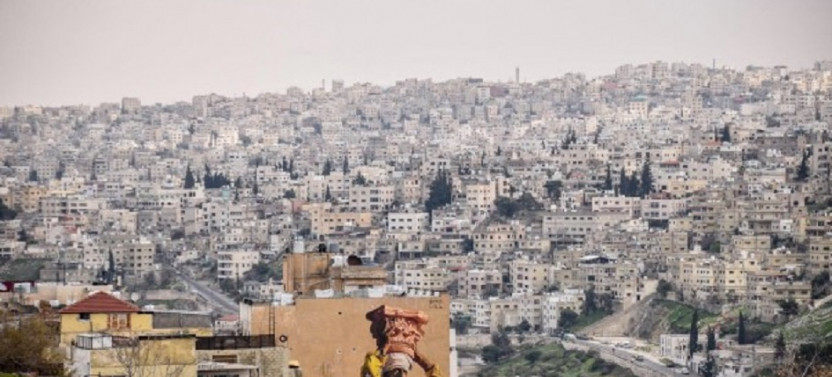
Local Flavor at Ajloun Castle. Ajloun – Amman City tour – Amman: In this village, you can visit the Castle of Ajloun or Qalaat Errabadh (Arabic for “Hilltop Castle”), from which there is a wonderful scenery westward into the Jordan Valley. One of Saladin’s generals built Ajloun Castle (Qal’at Ar-Rabad) in 1184 AD in order to control the iron mines of Ajloun, and to deter the Franks from invading Ajloun. Ajloun Castle dominated the three main routes leading to the Jordan Valley and protected the trade and commercial routes between Jordan and Syria; it became an important link in the defensive chain against the Crusaders, who, unsuccessfully spent decades trying to capture the castle and the nearby village. After that we will drive back to Amman and visit the capital of Jordan, is a fascinating city of contrasts. It is a special fusion of old and contemporary, and it is located in a steep area between the Jordan Valley, which is rich in agriculture, and the desert. Modern structures, hotels, upscale eateries, art galleries, and boutiques coexist peacefully in the city’s commercial district alongside more traditional coffee shops and tiny artisanal studios. Visit the Citadel is the ideal starting point for anyone interested in taking a historical journey. Its hilltop location affords tourists a window into Amman’s history as well as breathtaking views of the city’s center. The Umayyad Palace complex, the Temple of Hercules, and the Byzantine Church are a few of the Citadel’s must-see attractions, visit The rebuilt Roman Theatre, which was constructed into three sides of the hillside in the second century AD and seats about 6000 people, is still in use today.
Continued
Amman
Food Tasting. Breakfast. Enjoy Downtown city walks along with Local Food tasting and treats Experience
Continued
Amman
After that we will return to our hotel in Amman for overnight.
Day 3
Amman
Local Flavor at Madaba Map. Madaba city tour: Breakfast at the hotel, drive Just 30km from Amman, along with the 5,000-year-old Kings´ Highway, is one of the most memorable places in the Holy Land. After passing through a string of ancient sites, the first city you reach is Madaba, known as the “City of Mosaics." Best known for its spectacular Byzantine and Umayyad mosaics, Madaba is home to the famous 6th century Mosaic Map of Jerusalem and the Holy Land. With two million pieces of vividly colored local stone, it depicts hills and valleys, villages and towns as far as the Nile Delta. The Madaba Mosaic Map covers the floor of the Greek Orthodox Church of St. George, which is located northwest of the city center. The church was built in 1896 AD, over the remains of a much earlier 6th century Byzantine church. The mosaic panel enclosing the Map was originally around 15.6 X 6m, 94 sq.m., only about a quarter of which is preserved. Other mosaic masterpieces found in the Church of the Virgin and the Apostles and in the Archaeological Museum
Continued
Amman
Eco Tour at Mount Nebo. Archaeological Museum and Mount Nebo: Depict a rampant profusion of flowers and plants, birds and fish, animals and exotic beasts, as well as scenes from mythology and the everyday pursuits of hunting, fishing, and farming. Literally, hundreds of other mosaics from the 5th through the 7th centuries are scattered throughout Madaba's churches and homes. In line with Jordan's commitment to restoring and preserving its mosaic masterpieces, Madaba’s extensive Archaeological Park and Museum complex encompass the remains of several Byzantine churches, including the outstanding mosaics of the Church of the Virgin and the Hippolytus Hall, part of a 6th-century mansion. Proceed to Mount Nebo. Mount Nebo became a place of pilgrimage for early Christians from Jerusalem and a small church was built there in the 4th century to commemorate the end of Moses' life. Some of the stones from that church remain in their original place in the wall around the apse area. The church was subsequently expanded in the 5th and 6th centuries into the present-day large basilica with its stunning collection of Byzantine mosaics. The Serpentine Cross, which stands just outside the sanctuary, is symbolic of the bronze (or brazen) serpent taken by Moses into the desert and the cross upon which Jesus was crucified.
Continued
Amman
Local Flavor at Kerak Castle. Kerak Castle: After your thrilling desert adventure, continue to Kerak Castle, a medieval Crusader stronghold perched on a hilltop with sweeping views of the surrounding valley. Explore the labyrinthine corridors, towering walls, and ancient chapels of this impressive fortress, learning about its strategic significance during the Crusades.
Continued
Amman
Breakfast.
Continued
Amman
Transfer to your hotel in Petra for overnight.
Day 4
Petra Town
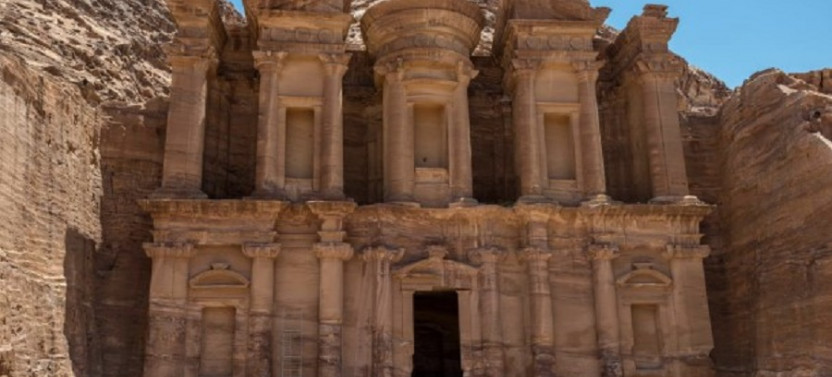
Archaeological Exploration at Little Petra. Day 4 Petra full day visit: Breakfast at the hotel, drive to visit Petra the world wonder, is undoubtedly Jordan's most valuable treasure and greatest tourist attraction, and it is visited by tourists from all over the world. It is not known precisely when Petra was built, but the city began to prosper as the capital of the Nabataean Empire from the 1st century BC, which grew rich through trade in frankincense, myrrh, and spices. Petra was later annexed to the Roman Empire and continued to thrive until a large earthquake in 363 AD destroyed much of the city in the 4th century AD. The earthquake combined with changes in trade routes, eventually led to the downfall of the city which was ultimately abandoned. By the middle of the 7th century Petra appears to have been largely deserted and it was then lost to all except local Bedouin from the area. In 1812 a Swiss explorer named Johannes Burckhardt set out to ‘rediscover’ Petra; he dressed up as an Arab and convinced his Bedouin guide to take him to the lost city, after this, Petra became increasingly known in the West as a fascinating and beautiful ancient city, and it began attracting visitors and continues to do so today. Petra is also known as the rose-red city, a name it gets from the wonderful color of the rock from which many of the city’s structures were carved. The Nabataeans buried their dead in intricate tombs that were cut out of the mountain sides and the city also had temples, a theater, and following the Roman annexation and later the Byzantine influence, a colonnaded street and churches. In addition to the magnificent remains of the Nabataean city, human settlement and land use for over 10,000 years can be traced in Petra, where great natural, cultural, archaeological and geological features merge. On December 6, 1985, Petra was designated a World Heritage Site, also Petra was chosen by the Smithsonian Magazine as one of the 28 places you should visit them before you die. LITTLE PETRA “BEIDAH” It is thought to have been occupied from 7200BC to 6500BC, which makes it one of the first settled villages in human history. Around that time the settlement burned down, and was rebuilt. After its reconstruction, it was only inhabited for a short while, before being totally abandoned. Remains of the houses and a retaining wall are still visible today. They are remnants of one of the first transitions from semi-settled nomads to settled villagers and the start of an agrarian economy. At the Beidha Neolithic site, you can view scientific reconstructions of what the Neolithic dwellings may have looked like. Excavated in the 1950’s and 1960’s by Diane Kirkbride and is located within the protected area of the Petra Archaeological Park. This site holds one of the oldest settlements in Jordan. During this period hunters and gatherers lived seasonally in this fertile and sheltered area. During the Neolithic period, between 8,330 and 7,000 B.C., a permanent village of farmers occupied Beidha and began the practice of agricultural and herding of domesticated goats and sheep. Many of the concepts and practices that we use today in agrarian societies started in small settlements such as these. The settlers lived in round houses that although easy to construct, had a serious drawback – it was difficult to add a room to a round structure and a struggle for a solution is visible.
Continued
Amman
Breakfast. Dinner.
Continued
Amman
After that transfer to your hotel in Petra for dinner and overnight.
Day 5
Amman
Eco Tour at Little Petra. Day 5 Petra – Little Petra: Breakfast at the hotel, today we will start with LITTLE PETRA “BEIDAH” It is thought to have been occupied from 7200BC to 6500BC, which makes it one of the first settled villages in human history. Around that time the settlement burned down, and was rebuild. After its reconstruction, it was only inhabited for a short while, before being totally abandoned. Remains of the houses and a retaining wall are still visible today. They are remnants of one of the first transitions from semi-settled nomads to settled villagers and the start of an agrarian economy. At the Beidha Neolithic site, you can view scientific reconstructions of what the Neolithic dwellings may have looked like. Excavated in the 1950’s and 1960’s by Diane Kirkbride and is located within the protected area of the Petra Archaeological Park. This site holds one of the oldest settlements in Jordan. During this period hunters and gatherers lived seasonally in this fertile and sheltered area. During the Neolithic period, between 8,330 and 7,000 B.C., a permanent village of farmers occupied Beidha and began the practice of agricultural and herding of domesticated goats and sheep. Many of the concepts and practices that we use today in agrarian societies started in small settlements such as these. The settlers lived in round houses that although easy to construct, had a serious drawback – it was difficult to add a room to a round structure and a struggle for a solution is visible.
Continued
Amman
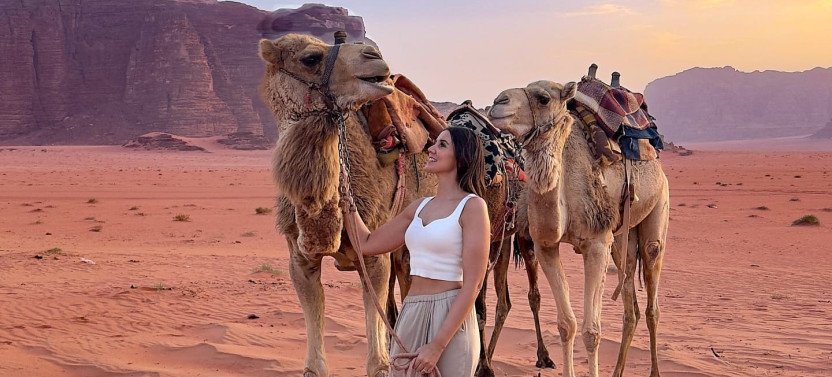
Sightseeing at Wadi Rum. Wadi rum 02 hrs. Jeep tour: Afternoon you will embark on an unforgettable 2-hour Jeep tour in Wadi Rum, where the desert's otherworldly landscapes unfold before you. Known as the "Valley of the Moon," Wadi Rum is famous for its towering sandstone mountains, vast red sand dunes, and dramatic rock formations. Your expert guide will take you through the desert, revealing the natural beauty and hidden treasures of this UNESCO World Heritage site.
Continued
Amman
After the visit drive to Wadi Rum, enjoy traditional dinner cooked under the ground “Zarb” overnight at your private tent.
Continued
Amman
Overnight
Day 6
Amman
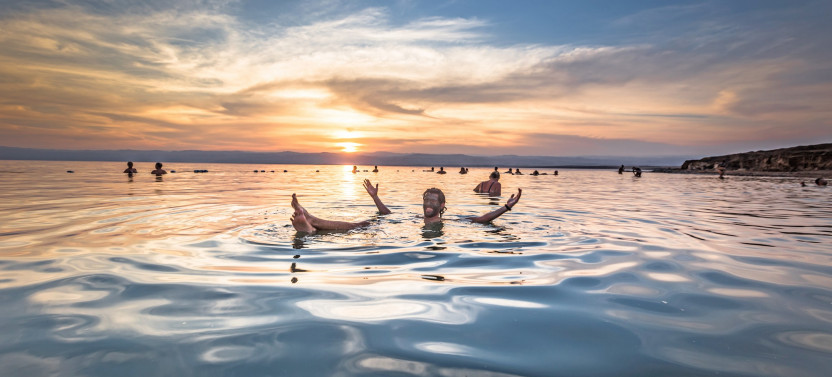
Leisure at Dead Sea. Wadi rum - Dead Sea: Breakfast at the camp, In the afternoon, relax and unwind at the Dead Sea, the lowest point on Earth. Famous for its therapeutic mineral-rich waters, you’ll have the chance to float effortlessly in the salty waters and experience the rejuvenating properties of the Dead Sea’s mud. Take in the stunning scenery and relax by the shore.
Continued
Amman
Breakfast.
Continued
Amman
Overnight.
Day 7
Amman
Day 7 Dead Sea – Amman Airport: Breakfast at the hotel pick up 4 hours before your departure flight. Your spiritual short trip ends here, and we are looking forward to see you again! Thanks for travelling with us!
Before You Go
What to know before booking
Included
2-hour jeep safari Free entry visa to Jordan Private vehicle with air-conditioning throughout the tour Pick-up and drop-off at Amman International Airport or any location in Amman Local English-speaking guide from visitor center for Jerash, Petra main trail, Madaba & Mount Nebo, Amman Citadel only Includes entry to Jerash, Ajloun Castle, Petra, Wadi Rum, Kerak Castle
Not Included
Any tour not mentioned in the program Any personal expenses, (Drinks on Beverage, Phone Calls, Laundries) All kinds of Tips, Guides, Bus Drivers (Recommended) Anything not mentioned in the inclusions section
What to Bring
The Jordanian Dinar (JOD) is the local currency. It’s best to exchange currency at the airport or local exchange offices. Credit Cards are widely accepted in major hotels and tourist spots, but always carry cash for smaller purchases in markets or rural areas Weather & Climate: Winter (December - February): The weather can be quite cold, especially in the desert areas and Petra. Bring layers and a warm jacket for evening temperatures Summer (June - August): Temperatures can soar, especially in the Dead Sea and Petra. Stay hydrated and wear sunscreen, a hat, and sunglasses Spring & Fall: These are the best times to visit, with moderate temperatures perfect for sightseeing Dead Sea Tips: Skin Care: The mineral-rich mud is great for the skin, so don’t miss the chance to apply some Dead Sea mud while floating in the water. It’s a unique experience and highly beneficial for your skin. Don’t Shave: Avoid shaving before visiting the Dead Sea, as the saltwater can irritate freshly shaved skin. Avoid Getting Water in Your Eyes: The salinity of the Dead Sea can sting if it gets in your eyes, so be careful when floating or swimming Petra Tips: Wear Comfortable Shoes: Petra involves significant walking and hiking. Be sure to wear sturdy shoes suitable for rocky and uneven terrain Exploration: If you have extra time, explore beyond the main site, such as the Royal Tombs or the Monastery (Al-Deir). The hike to the Monastery is challenging but offers stunning views Local Customs and Tipping: Supplementing Income: In Jordan, the wages for tour guides, drivers, and hotel staff can be relatively low, so tips help supplement their earnings. It's a significant part of their income, especially for those working in tourism A Sign of Appreciation: Tipping is a way to show your appreciation for good service. A small tip can go a long way in expressing gratitude for excellent service and hospitality Connectivity: SIM Cards: You can easily buy a local SIM card for your phone at the airport or in Amman. This will help you stay connected and avoid high roaming charges Wi-Fi: Most hotels and cafes in Amman, Petra, and Dead Sea resorts offer free Wi-Fi, but the speed may vary in more remote locations
Restrictions
1-2 Travelers: The price list is quoted for a medium-sized car, which includes 2 available seats for children. Therefore, up to 2 children can join the trip with 1-2 adults 3 adults: There are 4 seats available for children 4 adults: There are 3 seats available for children 5 adults: There are 2 seats available for children 6 adults: There is 1 seat available for a child. For 6 adults, there are no seats available for children, and any additional child bookings will require a separate price request Single/Double Room: A maximum of 2 children under 6 years old or 1 child under 6 years old and 1 child under 11 years old can share the same room with adults If the room is at full capacity and additional children are added, you will need to book an extra room by paying additional single supplement as an extra charge Triple Room: A triple room can accommodate 3 adults, but no children can be added to this room. In such cases, a single room and a double room must be booked for the adults and children
Meeting & Pickup
Pick up at Amman Queen Alia International Airport our representative will meet you
Planning Notes
Hotel pickup offered: Yes Confirmation: Manual By Business
 Featured Travel