
← Back to Barbados Experiences
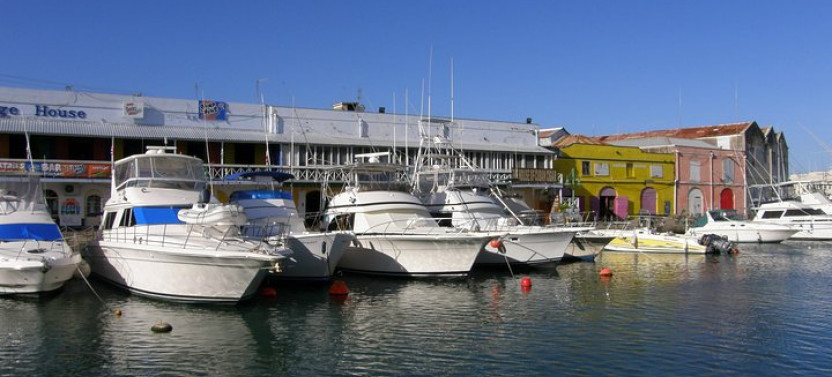
Bridgetown · St Michael · Barbados
Barbados Coastal Sightseeing Tour
Starting From
From $145.00 per person
Current Project Expedition rate
Experience inventory, live availability and secure booking provided by
Project Expedition
The Experience
What your day looks like
Barbados is an island of great beauty and diversity. Join us on this scenic tour, visiting many of those special places along or near the shoreline that make Barbados the gem of the Caribbean. Our route takes us along the South Coast beginning with Bridgetown the Capital of Barbados and a UNESCO World Heritage site; Our first stop which is a part of the UNESCO World Heritage site is the historic Garrison. The British built the first garrison in the West Indies at St. Ann's Fort in 1705. After a bit of history, it will be time to enjoy the Barbados coastline as we make our way up the coast and through the popular fishing village of Oistins making our second stop at Miami Beach. Miami Beach is a favorite with visitors and locals alike. Leaving Miami Beach we drive further up the south coast to Foul Bay; a long and wide beach whose shores are washed by turquoise waters. Our next stop is Codrington College. Codrington College was built in 1715 and is the oldest Theological College in the western hemisphere. Just up the hill from Codrington College is our next we will journey through the Parish of St John and into St Joseph down into Bathsheba which was named for its great beauty; it is also the location of the Soup Bowl the favorite stop for surfers in Barbados. After a morning of beauty, it will be time to taste the flavor of Barbados with local cuisine served up at our lunch stop at the Animal Flower Cave Restaurant located at the Northern tip of the island. The Northern point of the island differs drastically from most of the island. Here you will find waves crashing into limestone cliffs in a most dramatic fashion. Leaving North Point we head down the West Coast of the Island through two of the Island's oldest towns Speightstown and Holetown. Speightstown was also known as "Little Bristol" and was once the main port on the Island. Holetown was the sight of the first British settlement. In Speightstown, we will stop at a local bakery for some delicious local treats.
At a Glance
The experience, in brief
- Discover the great beauty of Barbados
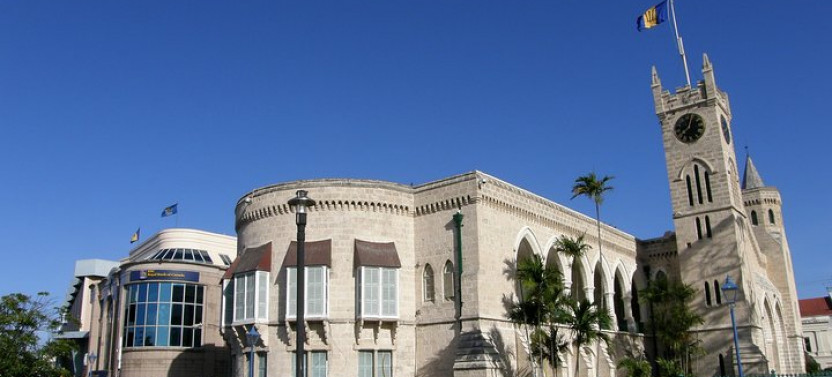
- Drive through the Capital Bridgetown a UNESCO World Heritage Site
- Visit the Garrison Savannah a UNESCO World Heritage site & see a few of the cannons
- View Miami Beach the most beautiful and popular beaches in the south coats
- See Foul Bay which is white sandy beaches overlooked by rugged cliffs
- Visit Codrington College a beautiful serene historical site
- Visit St Johns Parish Church, one of the oldest on the island built on a cliff with great views
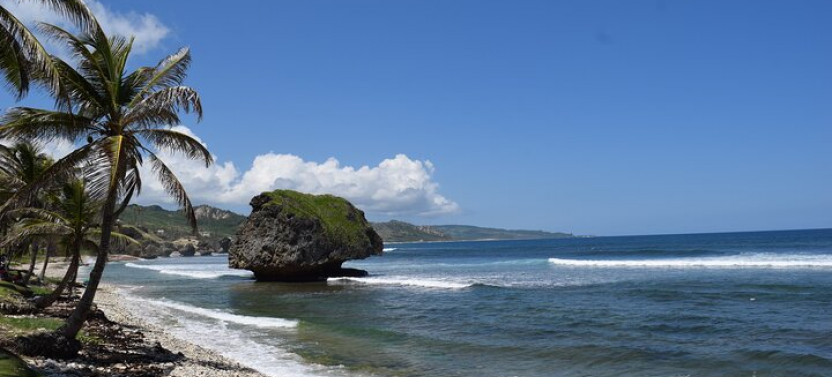
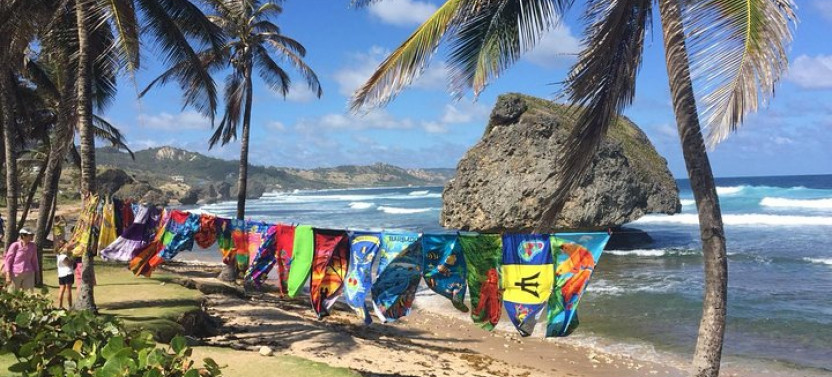
- Explore the coastal town of Bathsheba and view the mushroom rocks
- Visit Cherry Tree Hill and enjoy its fabulous sweeping views of the east coast
- Photo opp at the Morgan Lewis Windmill (endangered historical site)
- Drive along the platinum coast of Barbados through historic towns
- Watch the Atlantic waves crash on the cliffs in spectacular fashion
Detailed Itinerary
The journey, in full
Bridgetown: On the 5th of July 1628 that 64 settlers headed by Charles Wolverstone arrived. The location of Bridgetown was the most suitable place for a port. Its swampy lands however made it bad for the settlers’ health. The settlers named the town after a bridge that had been constructed by the early inhabitants of the island, the Amerindians. The Bridge of itself was called the Indian Bridge The principal streets in Bridgetown were laid out by John Swan and in keeping with tradition, Swan street was named after him. The main street Broad Street was named Broad Street as it is the broadest street in the town. In the early years the streets in town were ill-kept and in 1656 legislature passed an act where persons not keeping the space in front of their property clean could be fined 100 pounds of sugar for each day of noncompliance. Bridgetown's Swamp was filled in and replaced with a canal. The lower part of the Constitution is called the Careenage. It was named the Careenage because it ships were careened on to aside to be repaired The Garrison: From 1655 large fleets of British ships and soldiers were visiting and Barbados made it their base of operation. In the early years, there were no barracks for them or provisions, the care and expense of the officers fell in the hands of Barbadians themselves. After repeated visits, this became quite burdensome especially considering it was at a time when the island was quite impoverished. The legislature of Barbados was moved to petition the British government for a permanent garrison to be built on the island. It was not until 1780 that it was finally decided by the British Government to station a permanent garrison on the island. It was eventually decided that the Garrisons should be built near Charles Fort and St Anne’s Castle. 16 acres were purchased in 1789 and construction began by the early 19th century most of the buildings had been completed and had grown to cover 64 acres. The Garrison in Barbados is in fact the largest in the Caribbean. Many of the buildings were constructed of London brick brought out as ballast in ships which returned with sugar. Some 60 of the original buildings are still in existence today. The Savannah of itself was a very rocky area where many crabs lived. It had to be filled in and leveled for the troops to practice on. It was also the birthplace of cricket in Barbados and today serves as the island's racetrack. On November 30th, 1966 Barbados was led into Independence by the then Premier Errol Walton Barrow, officially celebrating the achievement of nationhood as a sovereign and independent state within the Commonwealth Miami Beach: One of the most beautiful and popular beaches in the south coats. We will stop here for a light snack and a photo opportunity Foul Bay: The name Foul Bay is an adaptation of the original name Fowl Bay which itself originated from a large number of migrating birds that once nested in a swamp located in the area. Foul Bay is an absolutely beautiful expanse of white sandy beaches overlooked by rugged cliffs. The beach is partly shaded by casuarina and palm trees. It is truly unspoiled & off the beaten path. The HARP Gun was landed at Foul Bay in August 1962. The High Altitude Research Project (HARP) Codrington College: Codrington College is the oldest Anglican theological college in the Western Hemisphere having been built in 1743 after Christopher Codrington had bequeathed the estate and considerable money at his death in 1710. Many Caribbean priests have trained at Codrington and the College continues to play an active part in education and theological teachings, working closely with the University of the West Indies. The setting of Codrington College is especially beautiful with a magnificent lily pond and a driveway lined with cabbage palm trees. Christopher Codrington Ill was the son of the Governor. Codrington's College's wildlife includes Green herons, ducks, pigeons, and a variety of fish. Whilst at Codrington you will be treated to coffee/tea/juice along with local treats such as banana bread coconut bread and fishcakes Bathsheba: Bathsheba is located on the Eastern coastline of Barbados. It is said that this area was named after the wife of King David whose name was “Bathsheba”. Legend has it that she bathed in milk to keep her skin beautiful and soft, and the rolling surf waters of Bathsheba’s “Soup Bowl” resembled Bathsheba’s bath. The area is popular with surfers. It is a popular area for locals and visitors alike and is dotted with several seaside cottages. Cherry Tree Hill: Approximately 850 feet above sea level, this spot offers an excellent view of the "Scotland District" which covers the parish of St.Andrew and is named after the Patron Saint of Scotland. It is believed that the name "Cherry Tree Hill" originated from the large number of cherry trees which once existed at this location. Today the road is lined with mahogany trees, which were introduced into Barbados after the Treaty of Paris in 1763. As you descend the hill the mahogany trees give way to swaying sugar cane. Morgan Lewis Windmill: The Morgan Lewis Sugar Mill is the last of the many Barbadian windmills once used to produce sugar. The wind-powered sugar mill is one of the last of its kind and a monument to the once-booming sugar industry in Barbados. North Point Barbados: We visit North Point Barbados for the great views. The Animal Flower Cave is also located at North Point But the entrance fees are not included in this tour. During the Months of Dec to April Humpback whales migrate through the Caribbean. North Point is one of the popular viewing sights. Located at Animal Flower cave is a wonderful restaurant where you will enjoy lunch with a spectacular view. Speightstown: Holetown: Holetown was the first town in Barbados. in 1625 by an Englishman named Henry Powell, who was blown off course and landed in Barbados by accident. He returned to Barbados two years later in 1627 with a group of English settlers who named the area Jamestown after the then king of England James 1st. The name Holetown comes from the river mouth an area they referred to as The Hole, by early settlers as it provided them a safe landing place
Your Itinerary
Your day, step by step
Day 1
Bridgetown
Sightseeing.
Continued
Bridgetown
Sightseeing at Garrison.
Continued
Bridgetown
Sightseeing at Miami Beach, Barbados.
Continued
Bridgetown
Sightseeing at Foul Bay, Barbados.
Continued
Bridgetown
Sightseeing at Codrington College ( Barbados).
Continued
Bridgetown
Sightseeing at Bathsheba, Barbados.
Continued
Bridgetown
Sightseeing at Cherry Tree Hill, Barbados.
Continued
Bridgetown
Sightseeing at Morgan Lewis Windmill.
Continued
Speightstown
City/Town Tour.
Before You Go
What to know before booking
Included
Friendly, knowledgeable & licensed tour guide Small-group tour with a maximum of 8 persons unless you book a group
Not Included
Tip or Gratuity
Restrictions
Not stroller accessible. Not suitable for pets. No public transportation nearby. Infants must not sit on laps. Not recommended for people with back problems.
Meeting & Pickup
Hotel or Cruise Port pickup and drop-off in Barbados are included.
Languages Offered
[object Object]
Planning Notes
Hotel pickup offered: Yes Confirmation: Automatic

 Featured Travel